


Sustanon

Critical Facts About Benefits & Risks
Sustanon is an injectable testosterone medicine known for combining four different testosterone esters in one formulation. It is often discussed in bodybuilding communities because testosterone plays an important role in muscle development, strength, libido, bone health, and red blood cell production. However, Sustanon is a prescription medicine—not a risk-free performance supplement—and its effects depend on the person’s hormone status, medical history, and pattern of use.
Understanding Sustanon requires more than looking at its name or the number on the ampoule. Its ester mixture affects how testosterone is released, while treatment decisions require clinical assessment and monitoring. Nonmedical use for muscle growth can expose users to hormonal suppression, fertility problems, elevated hematocrit, blood pressure changes, and other adverse effects.
This guide explains what Sustanon 250 contains, how it works, its medical uses, its pharmacokinetics, the evidence behind bodybuilding claims, and the key safety considerations to understand before discussing testosterone treatment with a healthcare professional.
1. What Is Sustanon?
Sustanon is a brand of injectable testosterone medication. Testosterone is an androgen hormone involved in the development and maintenance of male reproductive tissues and secondary sex characteristics. It also contributes to muscle and bone maintenance, libido, red blood cell production, and other physiological processes.
Sustanon 250 is a well-known formulation containing four testosterone esters in an oil-based injection. The esters are converted by the body into testosterone. Their different properties influence the release profile after administration.
In countries where it is authorized, Sustanon is generally a prescription medicine used for testosterone replacement in appropriately assessed patients with confirmed testosterone deficiency. Product authorization and approved indications can vary by country, so readers should check the medicine information applicable to their location.
What does Sustanon 250 mean?
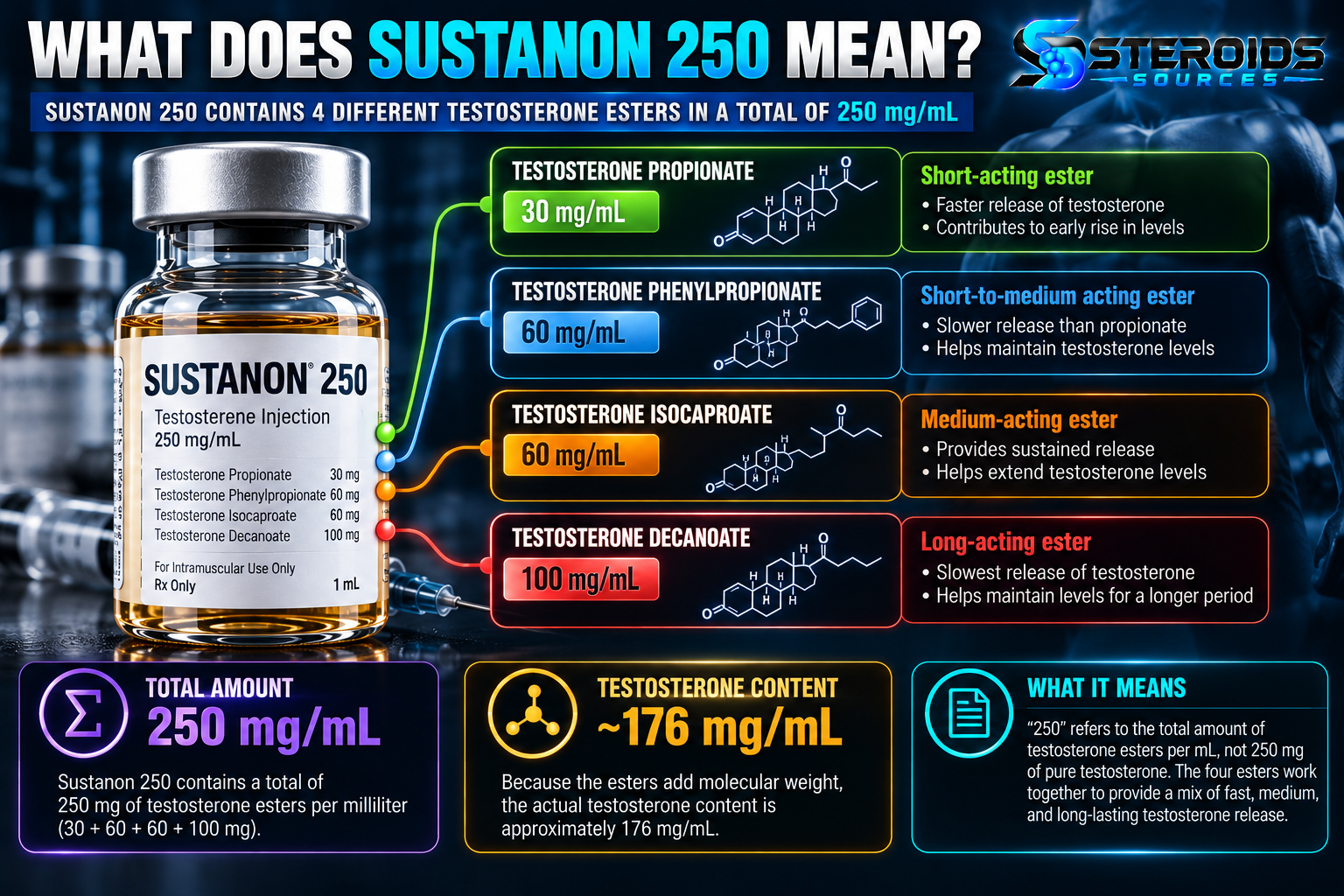
The “250” refers to the product’s labeled total amount of testosterone esters per milliliter—not 250 mg of unesterified testosterone.
The commonly documented Sustanon 250 formulation contains:
- Testosterone propionate: 30 mg/mL
- Testosterone phenylpropionate: 60 mg/mL
- Testosterone isocaproate: 60 mg/mL
- Testosterone decanoate: 100 mg/mL
Together, these add up to 250 mg/mL of testosterone esters. Because the ester groups contribute to the molecular mass, the corresponding total testosterone content is approximately 176 mg/mL.
This distinction matters when comparing testosterone formulations. The labeled mass of an esterified product is not always directly comparable with the testosterone content of another medicine.
Is Sustanon an anabolic steroid?
Yes. Testosterone is an anabolic-androgenic steroid (AAS). “Anabolic” refers to tissue-building effects, while “androgenic” refers to effects associated with male sexual development and related biological functions.
These properties overlap. Testosterone can support muscle protein synthesis, but it can also affect the reproductive system, skin, hair, blood, cardiovascular risk factors, and other organs. It is therefore inaccurate to describe Sustanon as a muscle-building drug without meaningful hormonal or systemic effects.
Sustanon is not the same as a dietary supplement marketed for testosterone support. It contains a pharmacologically active hormone and should be treated as a prescription medication.
2. Sustanon 250: The Four Testosterone Esters
Sustanon’s defining feature is its combination of four testosterone esters. An ester is a chemical group attached to testosterone that changes the compound’s release characteristics after injection.
Once the esters enter circulation, they are hydrolyzed to release testosterone. The different ester structures influence how quickly this process occurs and how the medication’s effects develop over time.
Testosterone propionate
Testosterone propionate is the shorter-acting ester in the formulation. Compared with the longer ester components, it generally releases testosterone over a shorter period.
Its inclusion contributes to the overall release profile, but it does not mean the complete formulation behaves like a propionate-only injection.
Testosterone phenylpropionate
Testosterone phenylpropionate has different release characteristics from propionate. It contributes another part of the formulation’s overall pharmacokinetic profile.
Its presence does not create a precise, predictable schedule of separate testosterone “waves” that applies identically to every individual. Absorption and hormone levels vary according to the formulation, injection characteristics, and individual physiology.
Testosterone isocaproate
Testosterone isocaproate is another ester included in the mixture. Like the other components, it is converted into testosterone after administration and contributes to the combined release profile.
It is important not to assume that each ester operates independently in a way that guarantees a specific blood testosterone level on a particular day.
Testosterone decanoate
Testosterone decanoate is the longer-chain ester in Sustanon 250. It contributes to the formulation’s extended release characteristics compared with shorter-acting testosterone esters.
However, the presence of a longer ester does not mean that every effect lasts for a fixed period or that the medicine can be used without monitoring. The pharmacokinetics of a mixed-ester formulation are more complex than a single number printed on a product label.
Does combining four esters make Sustanon better?
Not automatically. The combination creates a particular release profile, but the number of esters alone does not establish that Sustanon is more effective, safer, or better tolerated than other testosterone formulations.
Different products may suit different clinical circumstances because of their formulation, dosing schedule, availability, patient preferences, and individual response. The appropriate choice is a medical decision based on treatment goals and clinical monitoring—not simply a comparison of ester names.
3. What Is Sustanon Used For?
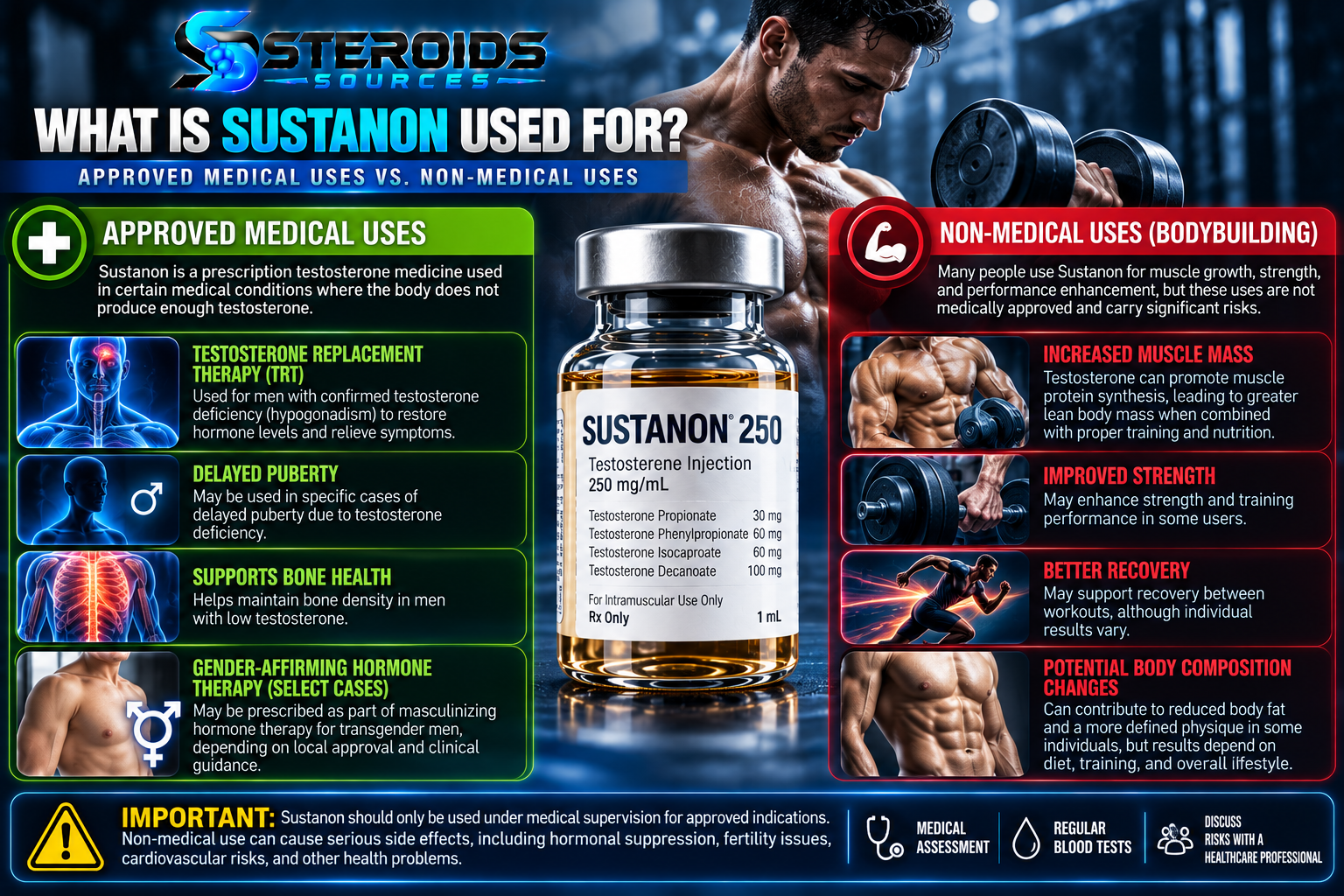
Sustanon’s primary medical role in markets where it is approved is testosterone replacement for men with confirmed testosterone deficiency, also known as male hypogonadism. Some product information also includes use as supportive masculinizing hormone therapy for transgender men, depending on the jurisdiction and local prescribing framework.
The distinction between medically indicated treatment and nonmedical bodybuilding use is essential.
Testosterone replacement therapy
Male hypogonadism occurs when the body does not produce sufficient testosterone because of a problem affecting the testes, the hypothalamus, or the pituitary gland.
Possible symptoms include reduced sexual desire, erectile difficulties, reduced energy, loss of muscle mass, reduced bone density, and mood changes. These symptoms are not specific to low testosterone, however, and can also be associated with sleep disorders, depression, chronic illness, medication effects, nutritional problems, or other conditions.
Diagnosis should therefore involve clinical assessment and appropriate laboratory testing. A single low testosterone result is not always sufficient to establish the cause or confirm that treatment is indicated.
When testosterone deficiency is confirmed and treatment is appropriate, testosterone replacement aims to restore hormone levels to a clinically suitable range and improve symptoms related to the deficiency. The expected benefit depends on the underlying condition and the outcome being assessed.
Sustanon and gender-affirming hormone therapy
Testosterone may be prescribed as part of masculinizing hormone therapy for transgender men. Treatment aims, monitoring requirements, and formulations should be discussed with a clinician experienced in gender-affirming care.
Potential changes can include a deeper voice, increased facial and body hair, changes in muscle and fat distribution, menstrual suppression, and changes in libido. Some effects, including voice deepening, may be irreversible.
The suitability of Sustanon specifically depends on local approval, availability, clinical guidance, and individual needs. It should not be assumed to be the preferred formulation for every patient.
Sustanon for bodybuilding
Bodybuilders may use testosterone because it has anabolic effects and can increase lean body mass under certain conditions. However, using Sustanon without a medical indication is different from replacing testosterone in someone with confirmed deficiency.
Nonmedical use may involve hormone exposure above the physiological range and can produce risks that are not justified by an approved treatment purpose. There is no universally safe bodybuilding cycle, and online reports do not establish a reliable risk-free protocol.
Sustanon is not approved simply because someone wants to build muscle, improve appearance, or increase gym performance. A prescription for testosterone should be based on a medical indication rather than physique goals alone.
4. Sustanon Half-Life and Duration: How Long Does It Last?
Questions about Sustanon half-life can be confusing because the product contains four different testosterone esters. It is more accurate to discuss the pharmacokinetic profile of the complete formulation than to assign one simple half-life to every component.
After an injection, the esterified compounds are released and converted into testosterone. Blood testosterone levels rise, reach a peak, and then decline as the drug is absorbed, metabolized, and eliminated.
How quickly does Sustanon work?
Official product information for Sustanon 250 describes a rise in testosterone after administration, with peak plasma concentrations reported approximately 24–48 hours after a single injection in the studied setting. The precise response varies between individuals and is not a guarantee of how someone will feel.
Some physiological effects may develop over different time frames. Changes in libido, mood, energy, body composition, and blood parameters do not necessarily occur together or at the same speed.
Feeling a noticeable effect does not prove that testosterone levels are in an appropriate range. Conversely, a person may not notice an immediate subjective change even when blood hormone levels have changed.
How long does Sustanon stay in the body?
The medication’s effects and the time required for its components to be eliminated are not the same thing. Different esters have different release characteristics, and measurable testosterone can remain after the initial peak has passed.
A single “Sustanon half-life” number can therefore be misleading when used to predict the exact day the medicine stops affecting an individual. The formulation’s pharmacokinetic profile, the administration history, and individual metabolism all matter.
There is also no simple point at which all testosterone-related effects abruptly disappear. Some physiological changes may persist after blood levels have declined, while other effects track more closely with circulating hormone levels.
Does a longer duration mean fewer risks?
No. Longer-acting formulations can be convenient in some clinical settings, but duration alone does not determine safety. Testosterone can affect hematocrit, blood pressure, fertility, skin, mood, and other systems regardless of whether a person considers the product long-acting or short-acting.
If side effects occur, stopping or changing treatment does not guarantee that they will resolve immediately. This is one reason testosterone treatment should be planned and monitored by a qualified prescriber.
5. Sustanon Benefits for Muscle Growth and Performance
Testosterone plays a well-established role in muscle physiology. It influences androgen receptor signaling, protein metabolism, red blood cell production, and other processes that contribute to the body’s response to training and recovery.
However, the benefits observed in people with testosterone deficiency receiving medically supervised replacement should not be treated as proof that nonmedical use is safe or that every user will experience the same outcome.
Muscle mass and strength
Testosterone can support the maintenance and development of lean body mass. In appropriate clinical contexts, correcting testosterone deficiency may help improve body composition and certain physical outcomes.
In healthy individuals using testosterone without a medical indication, effects can differ substantially and may involve hormone exposure beyond the normal physiological range. Potential changes in muscle mass do not eliminate the risks of adverse effects, and body-weight increases may include water retention rather than muscle tissue alone.
Resistance training, adequate nutrition, sleep, and recovery remain important determinants of body composition. Sustanon does not replace these factors.
Recovery and physical performance
Testosterone affects several physiological systems involved in physical function. However, the extent to which an individual experiences improved recovery or athletic performance depends on multiple variables, including baseline hormone status, training, sleep, nutrition, and the degree of hormone exposure.
Anecdotal reports from bodybuilding forums cannot reliably quantify benefits or predict the safety of a particular pattern of use. Self-reported results may also be confounded by other drugs, training changes, dietary strategies, and selection bias.
Testosterone is prohibited in competitive sport unless the relevant rules permit its use under an applicable therapeutic-use exemption. Athletes should consult the anti-doping rules that apply to their sport and governing body.
Libido, energy, and well-being
In men with confirmed testosterone deficiency, treatment may improve symptoms such as reduced libido when those symptoms are genuinely related to low testosterone. Responses vary, and testosterone does not reliably resolve every cause of fatigue, erectile dysfunction, or low mood.
Using testosterone when levels are already adequate may not deliver the same clinical benefit as treating a diagnosed deficiency. It can also suppress the body’s own testosterone production and interfere with sperm production.
What about fat loss?
Testosterone can influence body composition, but Sustanon is not an approved standalone fat-loss medication. Changes in lean mass, fat mass, appetite, activity, and fluid retention may all influence scale weight.
Claims that Sustanon guarantees rapid fat loss, creates a particular physique, or delivers the same results for everyone are not supported. Body composition outcomes depend on many interacting factors, and nonmedical hormone use carries risks that should not be minimized.
6. Sustanon Side Effects and Health Risks
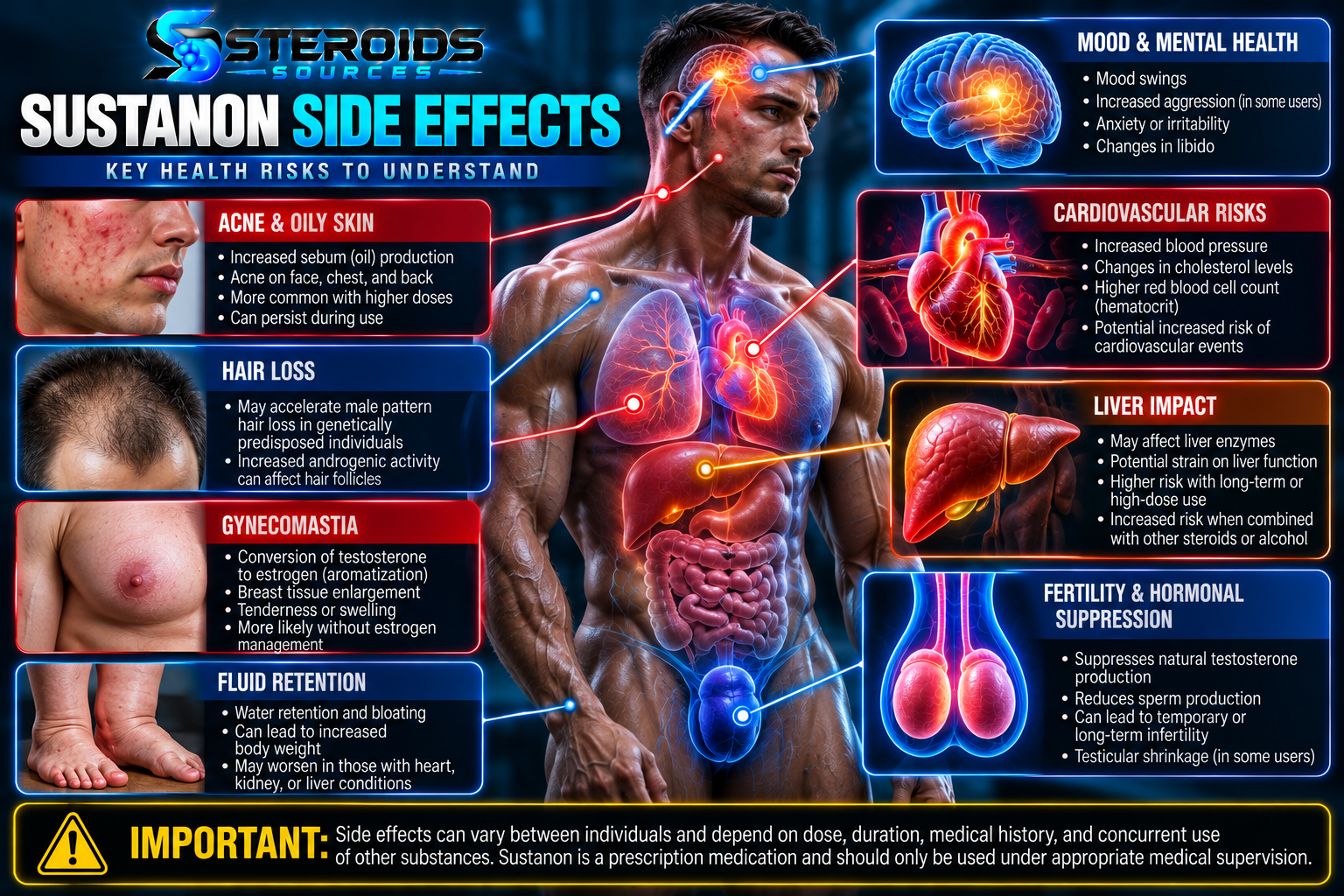
Sustanon can cause adverse effects even when it is prescribed. The risk profile depends on the person’s health, the treatment plan, hormone exposure, other medications, and the quality of clinical monitoring.
Nonmedical use can add further uncertainty because exposure may exceed the intended therapeutic range and users may combine testosterone with other anabolic steroids or performance-enhancing drugs.
Suppression of natural testosterone and fertility
External testosterone can suppress the hypothalamic-pituitary-gonadal axis, the hormonal system that regulates the body’s own testosterone production and sperm formation.
As a result, the testes may produce less testosterone internally, and sperm production can fall substantially. In some users, this can lead to infertility or reduced fertility. Recovery after stopping testosterone varies and may take an extended period; it is not guaranteed to be immediate or complete.
Men who want to preserve fertility should discuss this before starting treatment. Testosterone replacement is not a fertility treatment, and using it without an appropriate medical assessment can undermine reproductive goals.
Elevated hematocrit and red blood cell count
Testosterone can increase red blood cell production. In some patients, hemoglobin and hematocrit may rise to levels that require clinical attention or a change in treatment.
A high hematocrit can increase blood viscosity and may contribute to health risks. Monitoring a complete blood count is therefore an important part of appropriate testosterone treatment.
Symptoms alone cannot reliably identify this problem. Someone may feel well while a blood test reveals a clinically significant change.
Blood pressure and cardiovascular considerations
Testosterone products can increase blood pressure, and current regulatory guidance has emphasized blood-pressure monitoring for testosterone medicines. The relevance of this effect depends on the formulation, individual health, and other risk factors.
Fluid retention can also occur, which may be particularly concerning for people with certain cardiac, kidney, or liver conditions. People with cardiovascular disease, uncontrolled hypertension, or a history of blood clots need individualized medical assessment.
The cardiovascular evidence for testosterone is nuanced: risks should not be overstated as identical for every patient, but neither should testosterone be presented as harmless. The findings from medically supervised replacement treatment cannot automatically be applied to supraphysiologic bodybuilding use.
Acne, hair loss, and gynecomastia
Testosterone can increase skin oil production and contribute to acne. In people genetically predisposed to androgenic hair loss, androgen exposure may accelerate scalp hair thinning.
Some testosterone is also converted into estradiol, a form of estrogen. Changes in estrogen levels can contribute to breast tenderness or gynecomastia in some circumstances, although the causes of these symptoms are not always straightforward.
Mood changes, altered libido, changes in cholesterol levels, and fluid retention may also occur. The presence and severity of side effects differ between individuals.
Prostate and urinary considerations
Testosterone treatment may affect prostate-related symptoms and requires appropriate assessment based on age, medical history, and current guidance. Product information includes precautions for people with known or suspected prostate cancer.
Testosterone should not be started without discussing relevant prostate history and the appropriate monitoring plan with a clinician. New or worsening urinary symptoms should be evaluated rather than automatically attributed to normal aging.
Injection-related risks
Sustanon is an oil-based intramuscular injection. Injection-site pain and local reactions can occur. Official product information also describes a rare reaction called pulmonary oil microembolism, in which oily solution enters the circulation and causes symptoms such as coughing, shortness of breath, chest discomfort, dizziness, sweating, or fainting around the time of injection.
Sudden breathing difficulty, chest pain, fainting, or other severe symptoms require urgent medical attention. Injections should be administered according to the product’s instructions by an appropriately trained healthcare professional.
Other important precautions
The Sustanon 250 product information identifies additional considerations, including:
- Peanut or soya allergy: Some formulations contain refined peanut oil and may be contraindicated in people with relevant allergies.
- Sleep apnea: Testosterone may worsen existing sleep apnea in some patients, particularly those with relevant risk factors.
- Diabetes: Testosterone can affect glucose control, so people using diabetes medicines may require appropriate monitoring.
- Anticoagulants: Testosterone may alter the effects of certain blood-thinning medicines.
- Severe heart, liver, or kidney disease: Fluid retention and other complications may be particularly concerning.
- Pregnancy: Testosterone is not appropriate during pregnancy and can cause harm to fetal development.
The full product information for the exact medicine should be reviewed before treatment. The list above is not exhaustive.
7. Sustanon Dosage, Monitoring, and Medical Safety
There is no single Sustanon schedule that is suitable for everyone. When prescribed for confirmed testosterone deficiency, treatment is individualized according to the product labeling, clinical response, laboratory results, and the patient’s health status.
The dosing information on an approved product label is intended for its specified medical indications. It should not be repurposed as a bodybuilding cycle or used to justify self-directed injections.
Why testosterone testing matters
Symptoms such as fatigue, low libido, reduced strength, and mood changes can have many causes. Before testosterone treatment is considered, a clinician should evaluate the symptoms and use appropriate blood tests to determine whether testosterone deficiency is present.
For adult men being evaluated for hypogonadism, diagnosis generally requires compatible symptoms or signs together with consistently low testosterone measurements. The timing and interpretation of testing matter, and additional investigations may be needed to identify the underlying cause.
Starting treatment without establishing the diagnosis can expose someone to risk without addressing the real problem.
What should be monitored during treatment?
Monitoring depends on the patient and the applicable clinical guidance. It may include:
- Testosterone levels: To assess response and help maintain an appropriate treatment range.
- Complete blood count and hematocrit: To identify excessive increases in red blood cell levels.
- Blood pressure: Because testosterone products may raise blood pressure.
- Prostate assessment when appropriate: Based on age, symptoms, risk factors, and clinical guidance.
- Lipid profile and other laboratory tests: Depending on the patient’s risk profile and the product information.
- Symptoms and adverse effects: Including fluid retention, acne, mood changes, sleep-related symptoms, and changes in urinary function.
The purpose of monitoring is not simply to confirm that testosterone has increased. It is to assess whether treatment is providing a meaningful clinical benefit while keeping risks under review.
Can you use Sustanon without a prescription?
Sustanon is a prescription medicine in the markets discussed in its official product information. Laws and availability differ by country, but obtaining a product without appropriate medical oversight can increase the risk of counterfeit or contaminated products, incorrect labeling, and unsafe use.
Online sellers may advertise products as pharmaceutical grade or guaranteed authentic. Such claims do not establish product quality. A label or photograph alone cannot confirm the contents, sterility, storage history, or authenticity of an ampoule.
Testosterone should be used only through lawful, medically appropriate channels. Anyone who has already used a non-prescribed product and develops concerning symptoms should seek medical advice and provide clinicians with accurate information about what was taken.
Is Sustanon better than testosterone enanthate?
Neither formulation is universally better. Sustanon contains four testosterone esters, while testosterone enanthate contains one ester. Both can be used in testosterone treatment in appropriate markets, but their pharmacokinetics, availability, administration schedules, and individual tolerability may differ.
The best choice depends on the person’s diagnosis, response to treatment, preference, local prescribing options, and clinician’s assessment. Comparing the number of esters or relying on bodybuilding anecdotes is not enough to establish superiority.
People should not switch formulations or change their injection schedule without consulting the prescriber, because changes can affect hormone levels and side effects.
Frequently Asked Questions About Sustanon
1. What is Sustanon 250?
Sustanon 250 is an injectable testosterone medicine containing four testosterone esters: propionate, phenylpropionate, isocaproate, and decanoate. In countries where it is approved, it is used for specified medical indications such as confirmed testosterone deficiency.
2. What are the four testosterone esters in Sustanon?
The four esters are testosterone propionate, testosterone phenylpropionate, testosterone isocaproate, and testosterone decanoate. They have different release characteristics and together determine the formulation’s overall pharmacokinetic profile.
3. How long does Sustanon stay in the body?
There is no single simple duration that applies to every component and every person. The mixed-ester formulation releases testosterone over time, and the duration of measurable hormone levels and physiological effects can vary.
4. What are the main benefits of Sustanon?
For people with confirmed testosterone deficiency, medically supervised treatment may improve deficiency-related symptoms and help restore testosterone to an appropriate range. Muscle and body-composition effects are not guaranteed, and nonmedical use carries additional risks.
5. What are the most common Sustanon side effects?
Potential effects include increased red blood cell count, weight gain, acne, fluid retention, blood pressure changes, changes in libido or mood, and alterations in cholesterol or liver-related laboratory results. The exact risks vary by individual.
6. Does Sustanon increase muscle mass?
Testosterone can support muscle development, but results depend on hormone status, training, nutrition, and other factors. Muscle gain does not make nonmedical use safe or establish that Sustanon is appropriate for bodybuilding.
7. Can Sustanon affect fertility?
Yes. External testosterone can suppress the body’s own testosterone production and reduce sperm formation. People who may want biological children should discuss fertility implications before starting testosterone treatment.
8. What is the difference between Sustanon and testosterone enanthate?
Sustanon combines four testosterone esters, whereas testosterone enanthate contains a single ester. The formulations have different pharmacokinetic profiles, but neither is universally superior for every patient.
9. Is Sustanon used for testosterone replacement therapy?
Yes, in countries where it is approved, Sustanon can be prescribed for appropriate cases of confirmed testosterone deficiency. Treatment should follow the local product information and a clinician’s monitoring plan.
10. What blood tests are important during testosterone treatment?
Depending on the patient, monitoring may include testosterone levels, a complete blood count and hematocrit, and other tests such as lipids or prostate-related assessment when indicated. The clinician determines the appropriate schedule based on individual risk and current guidance.
Final Verdict: Understand Sustanon Before Considering Treatment
Sustanon is a mixed-ester testosterone medicine designed to deliver testosterone over time. Its four-ester formulation is a defining characteristic, but it does not automatically make the product more effective or safer than other testosterone medicines.
For people with confirmed testosterone deficiency, appropriately prescribed and monitored testosterone treatment may provide meaningful benefits. Nonmedical use for bodybuilding is different: it can suppress natural hormone production, impair fertility, raise hematocrit and blood pressure, and cause other adverse effects without the safeguards of a medically indicated treatment plan.
The most important steps are to verify the exact product, understand its approved use in your country, obtain a proper medical assessment, and follow appropriate monitoring. Marketing claims and gym anecdotes are not substitutes for evidence-based care.