


Sustanon vs testosterone

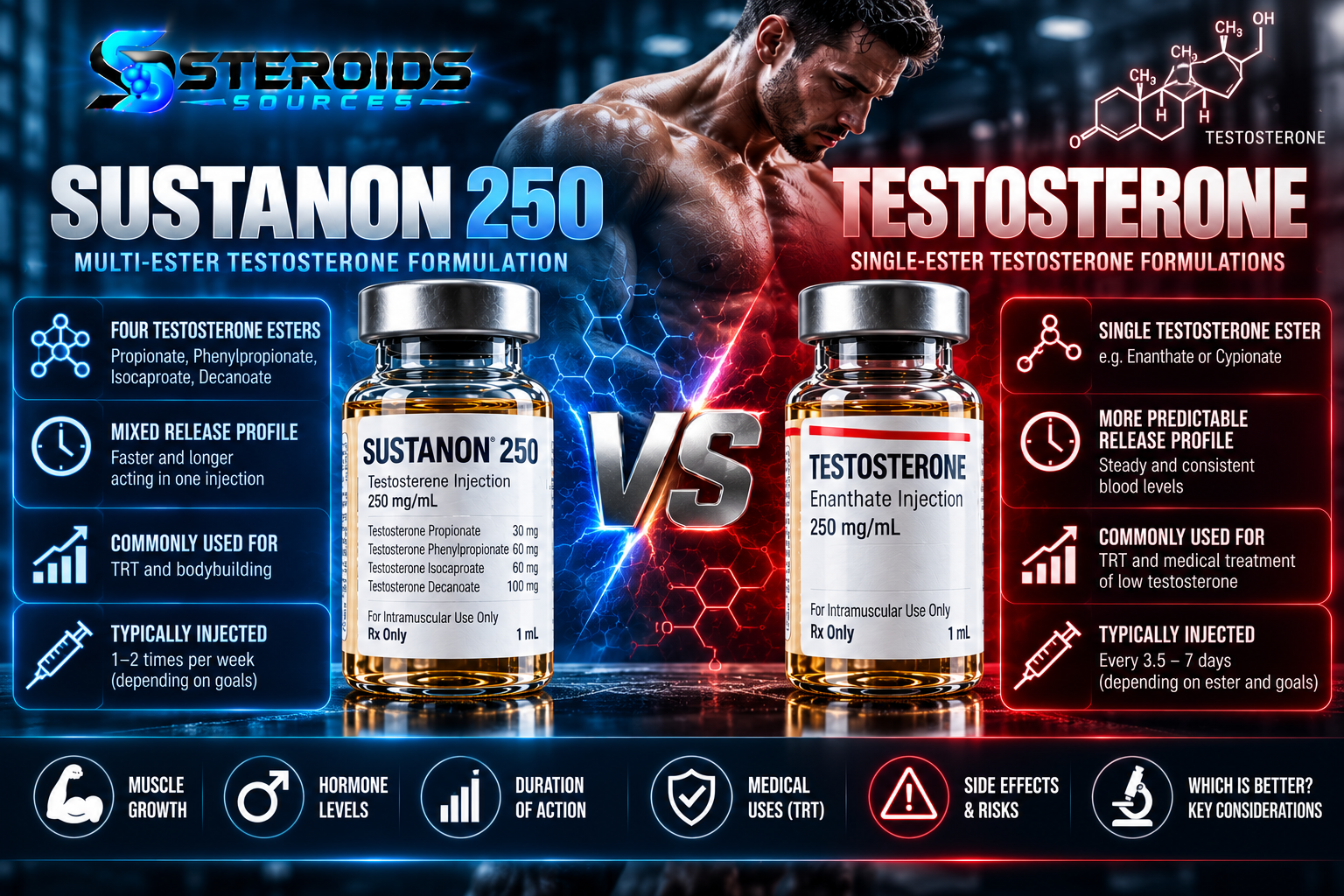
Sustanon vs testosterone is a common comparison among people researching testosterone replacement therapy (TRT), hormone health, and bodybuilding pharmacology. The two terms can sound like they describe different substances, but there is an important distinction: Sustanon is a testosterone formulation, not a different hormone. It combines multiple testosterone esters in a single injectable medicine, while other testosterone injections may contain one ester, such as testosterone enanthate or testosterone cypionate.
Although these formulations ultimately deliver the same active hormone, they can differ in how testosterone enters the bloodstream, how long the effects of an injection persist, how treatment is scheduled, and which products are available in a particular country.
Understanding these differences is important because testosterone is a powerful hormone with effects on sexual function, muscle and bone health, red blood cell production, fertility, mood, and cardiovascular risk factors. Testosterone treatment can be beneficial for people with a confirmed medical deficiency, but it is not risk-free and is not automatically appropriate for people seeking greater muscle mass or athletic performance.
This guide compares Sustanon with other testosterone formulations, explains their potential benefits and risks, and examines what matters when evaluating testosterone treatment.
1. What Is the Difference Between Sustanon and Testosterone?
The most important difference between Sustanon and other testosterone products is the formulation. Sustanon contains a blend of testosterone esters, whereas some other injectable products contain a single testosterone ester.
Testosterone itself is an androgen hormone involved in the development and maintenance of male reproductive tissues, sexual function, muscle mass, bone health, and several other physiological processes. The body produces testosterone primarily in the testes in males, under hormonal regulation involving the hypothalamus and pituitary gland. The ovaries and adrenal glands also contribute to androgen production in females.
When testosterone is used in an injectable medication, it is commonly attached to an ester. An ester changes the drug’s release characteristics, particularly when the medication is administered into muscle in an oil-based formulation. Enzymes subsequently remove the ester, releasing testosterone that can exert its hormonal effects.
What is Sustanon 250?
Sustanon 250 is an injectable formulation containing four testosterone esters. A commonly documented composition per milliliter is:
- Testosterone propionate: 30 mg
- Testosterone phenylpropionate: 60 mg
- Testosterone isocaproate: 60 mg
- Testosterone decanoate: 100 mg
The combined amount is 250 mg of testosterone esters per milliliter. This figure refers to the esterified ingredients’ total mass, not 250 mg of testosterone free of its ester groups.
The different esters have different pharmacokinetic characteristics. The formulation was designed to combine components with differing release profiles, although the actual blood concentration pattern depends on the product, administration, and individual physiology.
Product labeling and availability can differ between countries, so the packaging and official prescribing information for the specific product matter.
What does “regular testosterone” mean?
The phrase “regular testosterone” is imprecise. It may refer to testosterone as a hormone or to a particular medication.
Common injectable testosterone formulations include:
- Testosterone enanthate: An injectable formulation containing testosterone enanthate.
- Testosterone cypionate: An injectable formulation containing testosterone cypionate.
- Testosterone undecanoate: A longer-acting formulation used in certain medical settings.
- Testosterone gels and patches: Transdermal products that deliver testosterone through the skin.
- Other testosterone formulations: Depending on the country, products may include oral, nasal, or other delivery systems.
These products differ in their formulation, administration, absorption, and approved uses. They are not all interchangeable on a milligram-for-milligram basis.
The central distinction: Sustanon contains multiple testosterone esters, but the hormone ultimately responsible for its androgenic effects is still testosterone.
2. Sustanon vs Testosterone Esters: What Is the Difference?
Testosterone esters influence how quickly testosterone becomes available after administration. This is one of the most relevant differences when comparing Sustanon with testosterone enanthate, cypionate, or other injectable formulations.
How testosterone esters work
Testosterone itself is not highly suited to every desired injectable release pattern. Attaching an ester changes the molecule’s properties, helping determine how the drug behaves in an oil-based injection depot.
After an intramuscular injection, the formulation gradually releases the esterified compound. The ester is then cleaved, making testosterone available to the body.
The process does not mean that every ester has a fixed, universal duration. Release and elimination are affected by the particular ester, formulation, injection site, oil vehicle, dose, administration interval, and individual metabolism.
Sustanon: A combination of four esters
Sustanon combines propionate, phenylpropionate, isocaproate, and decanoate. The different components contribute to a mixed release profile.
The shorter-acting components and longer-acting component do not behave identically. As a result, testosterone concentrations following administration may rise and decline in a pattern that differs from a single-ester formulation.
However, the presence of four esters does not automatically make Sustanon more effective or provide more stable hormone levels in every patient. The result depends on the prescribed regimen and individual response.
Testosterone enanthate and cypionate
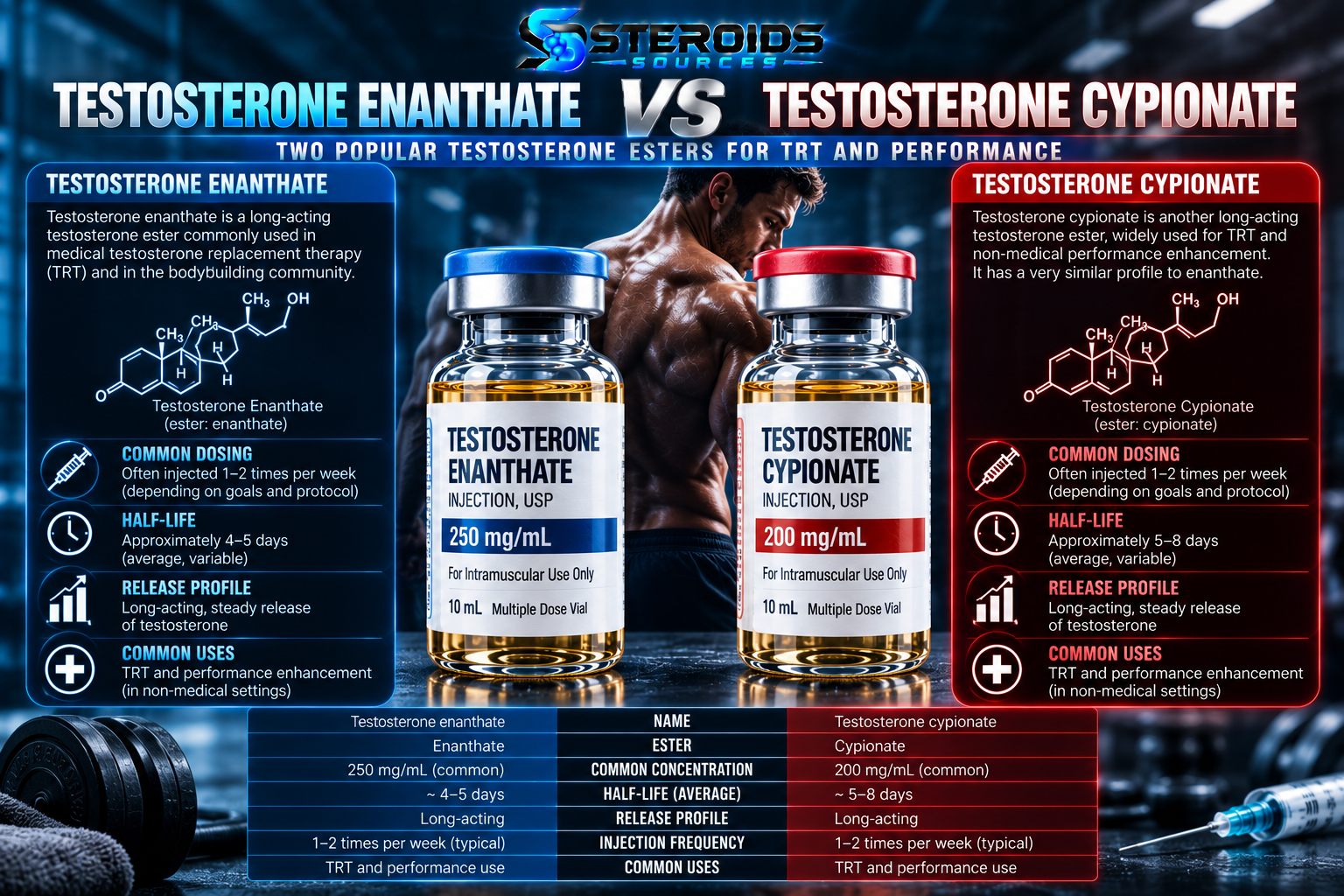
Enanthate and cypionate are single-ester formulations commonly used for testosterone replacement in appropriate patients.
They can offer practical advantages, including familiarity among clinicians, established prescribing guidance, and the ability to adjust a treatment plan according to measured testosterone levels, symptoms, tolerability, and the formulation’s labeling.
Neither is inherently superior to Sustanon for every patient. The choice depends on the clinical situation, availability, cost, treatment preferences, and response to therapy.
Comparison table
| Feature | Sustanon 250 | Testosterone enanthate | Testosterone cypionate |
|---|---|---|---|
| Formulation | Four testosterone esters | Single testosterone ester | Single testosterone ester |
| Active hormone | Testosterone | Testosterone | Testosterone |
| Release profile | Mixed ester-dependent profile | Ester-dependent profile | Ester-dependent profile |
| Administration | Injectable; follow product labeling | Injectable; follow product labeling | Injectable; follow product labeling |
| Medical use | Depends on local authorization and product labeling | Depends on local authorization and product labeling | Depends on local authorization and product labeling |
| Potential adverse effects | Testosterone-related risks | Testosterone-related risks | Testosterone-related risks |
The table illustrates formulation differences, not a ranking of effectiveness or safety.
3. Sustanon vs Testosterone: Duration of Action and Blood Levels
The duration of action is another reason people compare Sustanon with other testosterone injections. The relevant issue is how the formulation releases testosterone over time and how the treatment plan maintains concentrations appropriate for the individual.
Does Sustanon last longer than testosterone?
There is no simple answer because Sustanon is itself a testosterone product, and the comparison depends on which formulation is being considered.
Sustanon contains several esters, including testosterone decanoate, which has relatively prolonged release characteristics compared with the shorter ester components. Testosterone enanthate and cypionate also have extended release characteristics when administered as appropriate injectable formulations.
It is therefore misleading to describe Sustanon as universally longer-lasting than all other testosterone injections. The actual comparison depends on the products, their formulations, and the treatment schedules being evaluated.
Peak and trough testosterone levels
Following an injection, testosterone concentrations can rise and subsequently fall. The highest measured concentration is commonly called the peak, while a low point before the next administration may be called the trough.
These fluctuations can matter when interpreting laboratory results and evaluating symptoms. Some people may notice changes as testosterone levels fluctuate, while others experience few noticeable differences.
A clinician may consider:
- Symptoms across the treatment interval.
- Testosterone concentrations measured at an appropriate time.
- The exact formulation and prescribed schedule.
- Adverse effects and treatment tolerability.
- Relevant blood pressure and laboratory findings.
- Whether the current treatment meets the intended medical goal.
Blood tests must be interpreted in relation to the formulation and timing of the most recent administration. A result taken at one point in the treatment interval may not be directly comparable with a result taken at another.
Which formulation produces more stable levels?
Neither Sustanon nor a single-ester testosterone formulation guarantees stable levels in every person.
Concentration patterns depend on the medication, administration schedule, absorption, metabolism, and individual response. A properly managed treatment plan aims to maintain appropriate hormone concentrations while minimizing adverse effects and unwanted fluctuations.
It is not sound to assume that a blend of esters must be more stable than a single ester—or that a single ester must always be more predictable.
Key takeaway: Duration and blood-level patterns are clinical considerations, not proof that one formulation is inherently stronger or better.
4. Medical Uses: Sustanon vs Other Testosterone Treatments
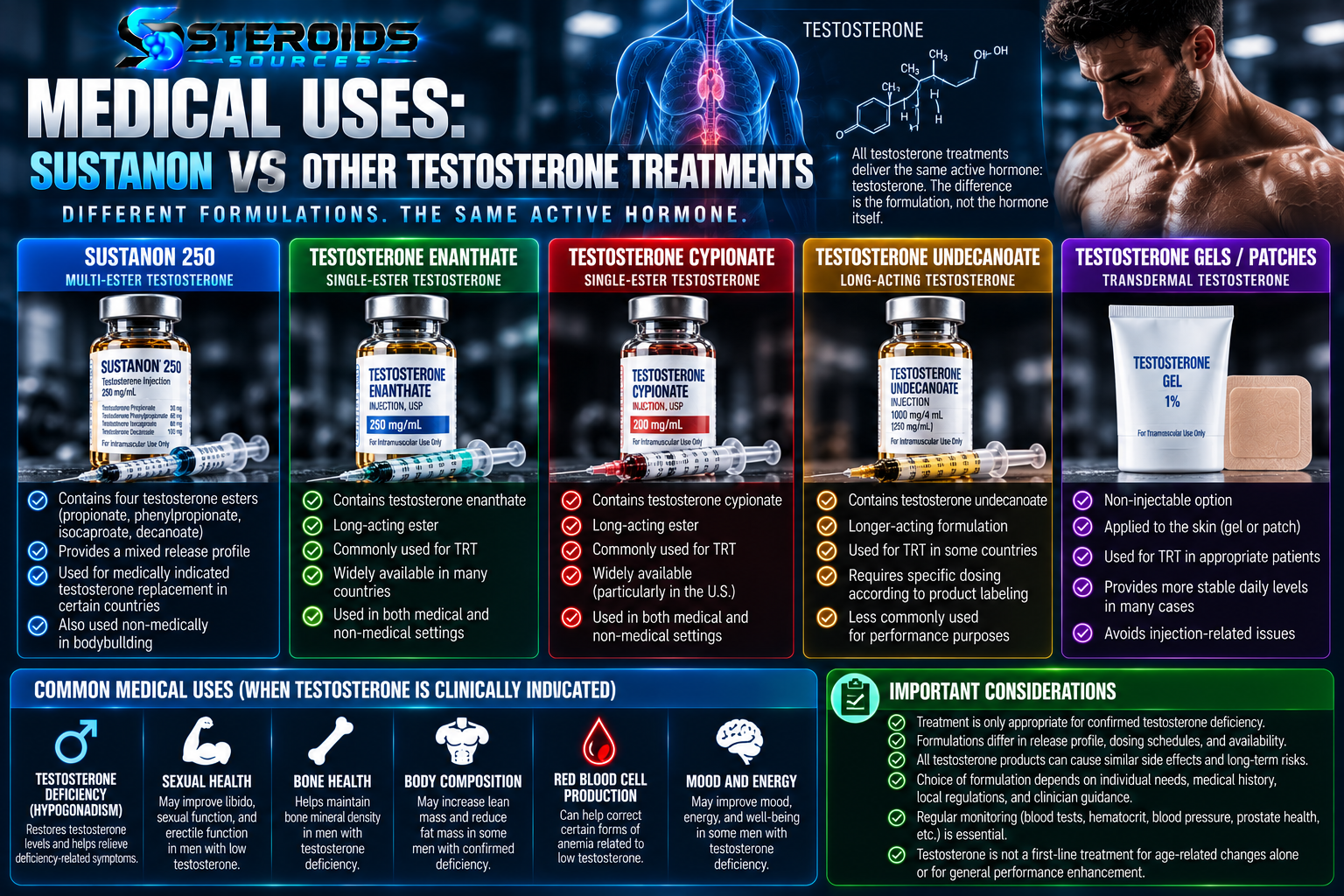
Testosterone medicines are used to treat certain medical conditions involving inadequate testosterone production, but approved indications vary by product and country.
In males, testosterone replacement may be considered when compatible symptoms or signs are accompanied by consistently low testosterone concentrations and the cause has been appropriately evaluated.
A low laboratory result alone does not establish that treatment is necessary. Testosterone can fluctuate, and temporary or reversible factors—including acute illness, inadequate sleep, some medications, and significant metabolic problems—may contribute to low concentrations.
Testosterone replacement therapy
Testosterone replacement therapy aims to address a medically established deficiency, rather than produce hormone levels above the normal physiological range.
Potential goals may include improving deficiency-related symptoms, sexual function, energy, or body composition in appropriately selected patients. The extent of improvement varies, and not every symptom attributed to low testosterone is caused by testosterone deficiency.
A medical assessment may involve:
- A detailed symptom and medical history.
- Repeat morning total testosterone measurements when appropriate.
- Free testosterone assessment when indicated.
- Luteinizing hormone (LH) and follicle-stimulating hormone (FSH) testing to help investigate the cause.
- Assessment of fertility plans and reproductive health.
- Review of medications, sleep, metabolic health, and other relevant conditions.
Additional testing depends on the findings and the patient’s circumstances.
Is Sustanon better for TRT?
Sustanon can be an option where it is authorized and clinically appropriate. Other formulations may be more suitable in different settings.
The best choice is not necessarily the formulation with the most esters, the longest apparent duration, or the strongest reputation in bodybuilding communities. It is the treatment that appropriately addresses the medical indication and can be monitored safely.
Factors that may influence selection include:
- Local prescribing authorization and availability.
- The formulation’s official labeling.
- Response to treatment and measured testosterone concentrations.
- Tolerability and adverse effects.
- Convenience and patient preference.
- Cost and access to follow-up care.
Patients should not switch formulations, change administration schedules, or combine testosterone products without guidance from the prescribing clinician.
Testosterone for bodybuilding
Testosterone is also used nonmedically for physique and performance enhancement. This is different from medically indicated testosterone replacement.
Using testosterone without a diagnosed deficiency, or using doses intended to increase muscle mass beyond physiological levels, can increase health risks. The fact that a substance is used in clinical medicine does not make nonmedical use safe.
Nonmedical anabolic-androgenic steroid use can suppress the body’s natural hormone production, impair fertility, alter cholesterol levels, increase blood pressure, raise hematocrit, and contribute to other adverse effects.
Sustanon is not inherently safer for bodybuilding than testosterone enanthate or cypionate. All deliver testosterone, and the risks depend on exposure, individual susceptibility, underlying health, and other substances used.
5. Benefits: Is Sustanon More Effective Than Testosterone?
Because Sustanon delivers testosterone, its potential hormonal effects overlap with those of other testosterone formulations. There is no general scientific basis for claiming that its four-ester composition automatically produces greater muscle growth, strength, libido, or overall effectiveness.
Benefits depend primarily on the individual’s starting hormone status, medical indication, treatment exposure, and response.
Potential benefits when testosterone deficiency is confirmed
For appropriately diagnosed patients, medically supervised testosterone treatment may improve some symptoms associated with testosterone deficiency.
Depending on the individual, potential benefits can include:
Sexual health: Testosterone treatment may improve sexual desire and some aspects of sexual function in men with confirmed deficiency. Erectile dysfunction can have multiple causes, so testosterone is not a universal treatment for erection problems.
Body composition: Treatment may increase lean body mass and change fat mass in some patients. Changes in lean mass do not necessarily translate into proportional improvements in strength, athletic performance, or long-term health.
Bone health: Testosterone has important roles in bone physiology. Treatment may affect bone mineral density in some men with deficiency, but it should not be assumed to prevent fractures in every patient.
Anemia: Testosterone can stimulate red blood cell production. In selected patients, treatment may improve certain forms of anemia, but this same effect can cause hematocrit to rise excessively.
Mood and well-being: Some patients may experience improvements in certain mood-related or deficiency-associated symptoms. Fatigue, low motivation, and depressed mood have many potential causes, so these symptoms should not automatically be attributed to low testosterone.
Does Sustanon build more muscle?
Sustanon is not established as inherently more anabolic than other testosterone formulations simply because it contains multiple esters.
Muscle growth is influenced by training, nutrition, recovery, genetics, hormone status, and numerous other factors. Testosterone exposure can influence muscle mass, but the relationship between hormonal exposure and performance is not a justification for unsupervised use.
Nonmedical testosterone use can cause significant health problems, including reproductive suppression, cardiovascular risk-factor changes, acne, hair loss in susceptible individuals, and mood-related effects.
Is one formulation better for libido or energy?
There is no universally superior formulation for libido, energy, or motivation. If a person’s symptoms are related to confirmed testosterone deficiency, appropriate treatment may help regardless of the particular formulation selected.
If symptoms persist despite treatment, clinicians may need to evaluate other explanations, such as sleep disorders, anemia, thyroid problems, depression, medication effects, relationship factors, or other medical conditions.
The most useful comparison is the treatment’s clinical outcome and safety—not marketing claims about a particular ester blend.
6. Sustanon vs Testosterone: Side Effects and Long-Term Risks
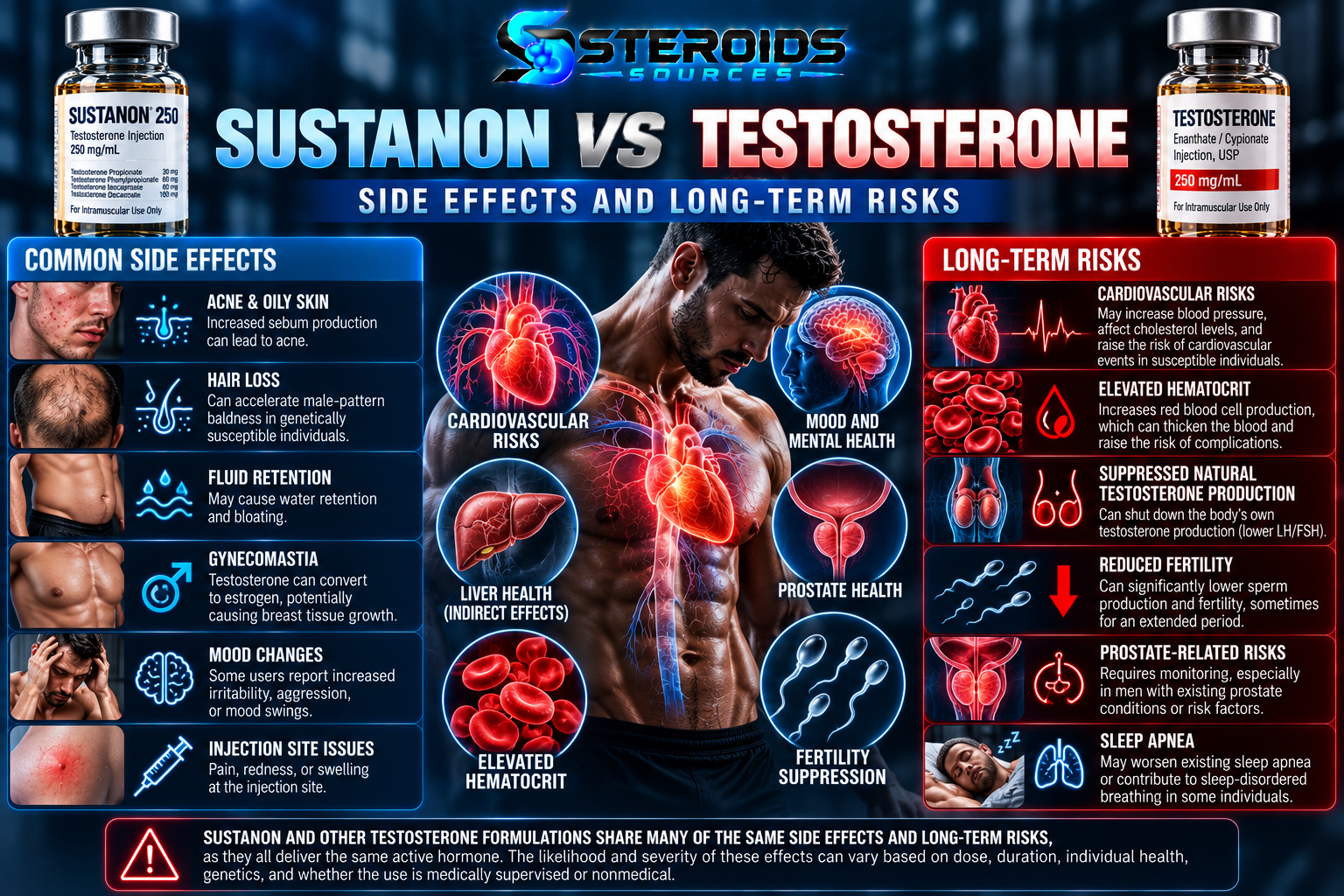
Sustanon and other testosterone formulations share many potential adverse effects because they deliver the same hormone. The route of administration and formulation can add their own considerations, but changing the ester does not eliminate testosterone-related risks.
The likelihood and severity of adverse effects vary with the individual’s health, treatment exposure, underlying conditions, and other medications or substances.
Common or recognized adverse effects
Potential adverse effects of testosterone treatment include:
- Acne and oily skin.
- Increased red blood cell production and elevated hematocrit.
- Fluid retention or swelling.
- Changes in blood pressure.
- Breast tenderness or enlargement in some individuals.
- Male-pattern hair loss in genetically susceptible people.
- Changes in mood or libido.
- Injection-site discomfort or reactions.
- Worsening of certain pre-existing conditions in susceptible patients.
Not every person will experience these effects, and the absence of symptoms does not rule out clinically important changes in blood pressure, hematocrit, or other measures.
Cardiovascular health and blood pressure
Testosterone treatment requires attention to cardiovascular risk factors, including blood pressure and hematocrit.
An increase in red blood cell production can cause hematocrit to rise. If it becomes too high, the clinician may need to reassess treatment and investigate contributing factors.
Testosterone products can also affect blood pressure. The relevance and magnitude of this effect depend on the product and the individual, so blood pressure should not be ignored simply because testosterone is being prescribed for a legitimate medical reason.
The cardiovascular evidence is complex and continues to be evaluated. Patients should discuss their personal history—including hypertension, cardiovascular disease, sleep apnea, and other relevant conditions—with a qualified clinician before treatment.
Fertility and natural testosterone production
One of the most important risks is suppression of the body’s own reproductive hormone system.
When testosterone is supplied from outside the body, the hypothalamus and pituitary generally reduce signaling through the reproductive axis. LH and FSH may decline, reducing the testes’ production of testosterone and impairing sperm production.
Consequently, testosterone treatment can reduce sperm counts and may cause infertility during treatment. Recovery after discontinuation varies and is not always rapid or complete.
People who wish to have children now or in the future should discuss fertility before starting treatment. Exogenous testosterone is generally not an appropriate fertility treatment for men seeking to improve sperm production.
Prostate-related considerations
Testosterone treatment requires appropriate assessment of prostate-related risks and symptoms, where relevant. It is not accurate to say that testosterone inevitably causes prostate cancer, but it is equally inappropriate to dismiss prostate health when evaluating a patient.
The suitability of treatment depends on individual risk factors, clinical findings, and applicable prescribing guidance. Prostate assessment and monitoring should be individualized rather than based on a single universal protocol.
Sleep apnea, edema, and other concerns
Testosterone can worsen certain conditions in susceptible patients, including some forms of sleep-disordered breathing. Fluid retention may also be important in people with particular cardiovascular or kidney conditions.
People with severe untreated obstructive sleep apnea, elevated hematocrit, certain prostate conditions, active or suspected hormone-sensitive cancers, or other relevant medical issues may require additional evaluation before treatment. The specific contraindications depend on the product’s labeling and the patient’s circumstances.
Are the risks lower with Sustanon?
There is no sound basis for assuming that Sustanon is inherently safer than testosterone enanthate or cypionate. The same applies in reverse.
Different formulations may produce different concentration patterns and practical treatment experiences, but all can produce testosterone-related adverse effects. Monitoring, appropriate patient selection, and clinically justified treatment decisions are central to risk management.
Important: Severe chest pain, sudden shortness of breath, one-sided leg swelling, fainting, or sudden neurological symptoms require urgent medical evaluation.
7. Which Is Better: Sustanon or Testosterone?
There is no single winner in the Sustanon vs testosterone comparison because Sustanon is itself a testosterone formulation. The meaningful question is which authorized formulation, if any, is appropriate for a particular person.
For someone with confirmed testosterone deficiency, the choice should be based on medical need, product availability, clinical evidence, tolerability, and the ability to monitor treatment.
For someone considering testosterone for bodybuilding without a diagnosed deficiency, neither Sustanon nor another injectable testosterone should be treated as a risk-free option.
When Sustanon may be considered
Sustanon may be considered when the product is authorized in the relevant country, its formulation is appropriate for the clinical situation, and the prescribing clinician believes it is suitable.
Its multiple-ester composition is a formulation characteristic—not proof of superior outcomes.
When another testosterone formulation may be considered
Testosterone enanthate, cypionate, undecanoate, gels, patches, and other authorized products may offer different administration characteristics and practical considerations.
A clinician may favor one formulation over another based on the patient’s response, relevant prescribing information, access, preferences, and medical circumstances.
There is no universal rule that one formulation is best for all patients or that an injectable formulation is necessarily superior to a transdermal product.
What should be monitored?
Monitoring depends on the indication, product, individual risk factors, and local clinical guidance. It may include:
- Testosterone concentrations measured at an appropriate point in the treatment interval.
- Complete blood count and hematocrit.
- Blood pressure and cardiovascular risk factors.
- Symptoms, adverse effects, and treatment response.
- Fertility goals and reproductive health.
- Prostate-related assessment when clinically appropriate.
- Other laboratory tests based on the individual’s medical history.
Patients should follow their prescribed monitoring plan and avoid changing the dose or schedule based on online comparisons alone.
Can you switch from Sustanon to testosterone enanthate or cypionate?
A clinician may sometimes switch a patient from one formulation to another, but the products should not be assumed to be directly interchangeable without considering their pharmacokinetics, prescribed regimen, and laboratory monitoring.
A switch may require reassessment of when blood tests are taken and how symptoms are interpreted. Patients should not combine formulations or independently calculate an equivalent regimen based only on the labeled milligram amount.
Final verdict
Sustanon and other testosterone medicines share the same active hormone, but their formulations and release characteristics differ. Sustanon combines four testosterone esters, whereas enanthate and cypionate contain a single ester.
These differences can influence treatment management, but they do not establish that Sustanon is stronger, safer, or more effective in every situation. For medically indicated treatment, the priority is a suitable formulation, appropriate monitoring, and a clear clinical rationale. For nonmedical performance enhancement, the risks remain significant regardless of which testosterone product is chosen.
Frequently Asked Questions
1. Is Sustanon the same as testosterone?
Sustanon is a testosterone medication containing multiple testosterone esters. It is not a different hormone. The ester groups affect the formulation’s release characteristics, while testosterone is responsible for the main androgenic effects.
2. Is Sustanon stronger than regular testosterone?
Not inherently. The word “testosterone” can refer to the hormone itself or to different medicines containing testosterone. Sustanon’s four-ester blend does not automatically make it stronger or more effective than testosterone enanthate, cypionate, or other formulations.
3. What is the difference between Sustanon 250 and testosterone enanthate?
Sustanon 250 combines four testosterone esters, while testosterone enanthate contains one ester. Both deliver testosterone, but their release characteristics and treatment management may differ. The appropriate product depends on the clinical indication, availability, and individual response.
4. Does Sustanon last longer than other testosterone injections?
Not universally. Sustanon includes a longer-acting ester alongside shorter-acting components, while other injectable testosterone formulations also have extended release characteristics. The duration and blood-level pattern depend on the specific product and how it is prescribed.
5. Which has more side effects: Sustanon or testosterone?
Both can cause testosterone-related adverse effects, including acne, elevated hematocrit, changes in blood pressure, fluid retention, and suppression of natural testosterone production. Individual risks vary, and neither formulation can be assumed to be universally safer.
6. Is Sustanon used for testosterone replacement therapy?
Sustanon is used for testosterone replacement in some countries where it is authorized and clinically appropriate. Approved indications differ by jurisdiction and product. Treatment should follow local prescribing information and a qualified clinician’s assessment.
7. Can Sustanon increase muscle mass?
Testosterone can influence muscle mass, particularly in people with testosterone deficiency. However, Sustanon is not inherently more anabolic than other testosterone formulations simply because it contains four esters. Nonmedical use for muscle growth carries significant health risks.
8. Does Sustanon suppress natural testosterone production?
Yes. Like other forms of exogenous testosterone, Sustanon can suppress hypothalamic and pituitary signaling, reduce the body’s own testosterone production, and impair sperm production. Fertility may be affected during treatment, and recovery after stopping can vary.
9. Can Sustanon affect fertility?
Yes. Exogenous testosterone can reduce LH and FSH signaling and suppress sperm production, sometimes substantially. Anyone planning to conceive should discuss fertility implications and alternative treatment approaches with a qualified clinician before starting testosterone.
10. Can you switch from Sustanon to another testosterone formulation?
A clinician may recommend a switch when medically appropriate. The transition should account for the formulations’ release profiles, treatment history, symptoms, and laboratory monitoring. Patients should not switch, combine products, or alter their schedules independently.