


testosterone

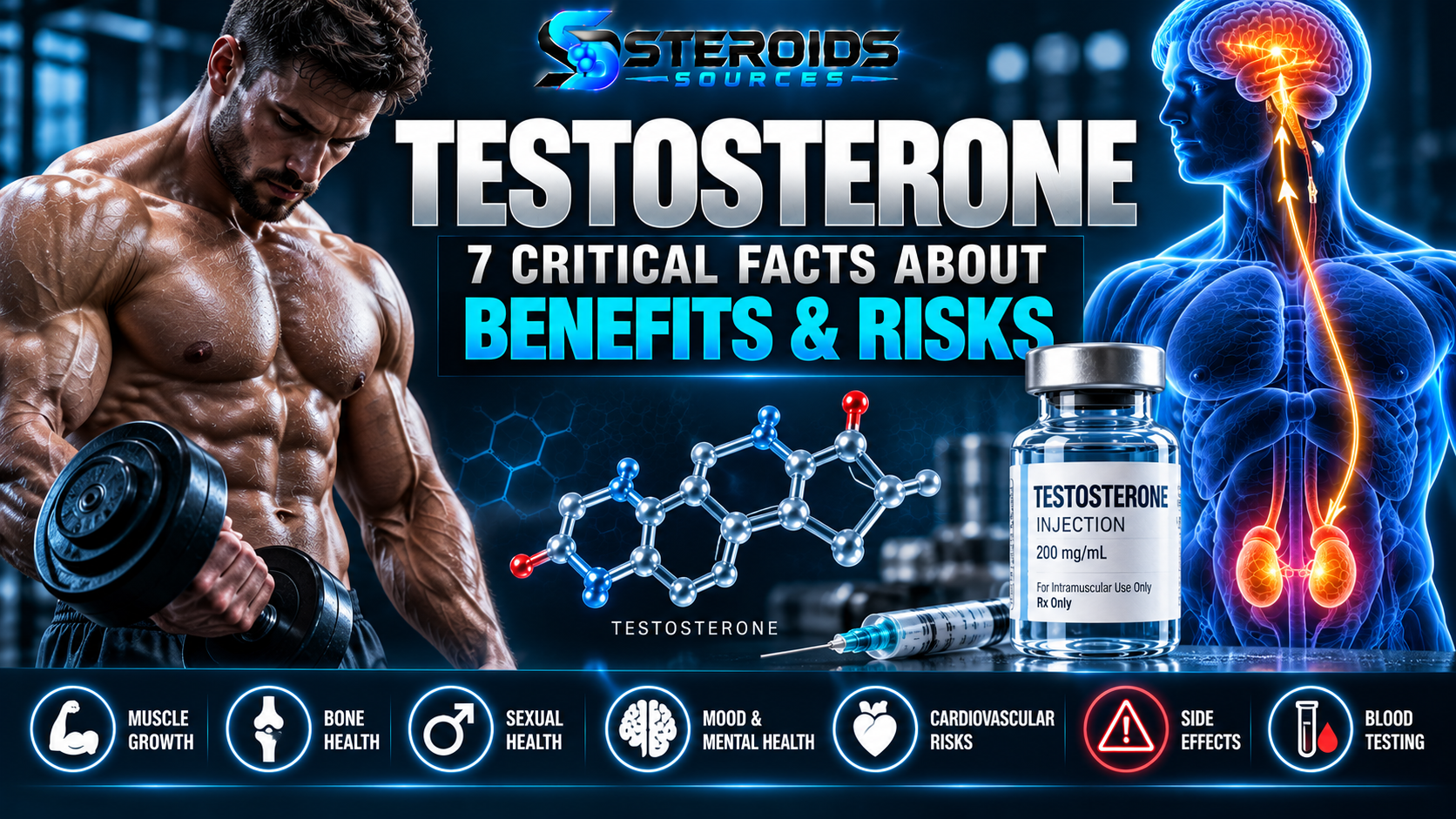
Testosterone is a hormone that plays an important role in sexual health, muscle development, bone strength, red blood cell production, and several other functions throughout the body. It is often discussed in bodybuilding and fitness because of its relationship with muscle mass, strength, and recovery. However, testosterone is much more than a performance-related hormone: both insufficient production and inappropriate exposure can affect long-term health.
Understanding testosterone means distinguishing normal hormone physiology from a clinical condition such as hypogonadism, as well as separating medically supervised testosterone replacement therapy (TRT) from nonmedical anabolic steroid use. Although testosterone treatment can benefit people with a confirmed deficiency, it is not automatically beneficial for everyone who feels tired, wants to build muscle, or notices changes associated with aging.
This guide explains what testosterone does, how levels are assessed, the symptoms associated with low testosterone, potential benefits, treatment options, side effects, and important safety considerations.
1. What Is Testosterone?
Testosterone is an androgen hormone produced primarily by the testes in adult males. Smaller amounts are produced by the ovaries and adrenal glands, and testosterone also serves as a precursor for other hormones in people of all sexes.
It belongs to a group of steroid hormones derived from cholesterol. Testosterone affects multiple tissues through androgen receptors, while some of it is converted into other hormones, including dihydrotestosterone (DHT) and estradiol.
These pathways help explain why testosterone influences a broad range of functions rather than acting only on muscle tissue.
Where is testosterone produced?
In adult males, most circulating testosterone is produced by specialized cells in the testes called Leydig cells. Their activity is regulated by luteinizing hormone (LH), which is released by the pituitary gland.
The hypothalamus, a region of the brain, releases gonadotropin-releasing hormone (GnRH). This signals the pituitary to release LH and follicle-stimulating hormone (FSH). LH stimulates testosterone production, while FSH works with testosterone to support sperm production.
This system is known as the hypothalamic-pituitary-gonadal axis.
When circulating testosterone levels rise, feedback signals normally reduce the release of GnRH and LH. This helps regulate natural production. Introducing testosterone from an external source can disrupt this feedback system and suppress the body’s own hormone production.
Total testosterone vs. free testosterone
Most testosterone in the bloodstream is attached to proteins, primarily sex hormone-binding globulin (SHBG) and albumin. A smaller fraction circulates unbound.
- Total testosterone: Measures testosterone in all forms circulating in the blood.
- Free testosterone: Measures the fraction that is not bound to proteins.
- SHBG: A protein that binds testosterone and influences how much is free or loosely bound.
- Albumin-bound testosterone: Testosterone attached relatively loosely to albumin.
Total testosterone is usually the initial laboratory measurement when investigating suspected testosterone deficiency. Free testosterone can provide additional information when total testosterone is near the lower end of the reference range or when SHBG is likely to be abnormal.
Neither a single number nor a laboratory result should be interpreted without considering symptoms, medical history, testing conditions, and the laboratory method.
Testosterone and DHT
Dihydrotestosterone is produced when the enzyme 5-alpha-reductase converts testosterone into DHT. DHT has potent androgenic activity in certain tissues and contributes to prostate development, facial and body hair growth, and other androgen-dependent processes.
DHT is also involved in androgenetic hair loss in genetically susceptible individuals. This is one reason testosterone-related treatments can affect scalp hair differently from facial or body hair.
Testosterone and estradiol
The enzyme aromatase converts some testosterone into estradiol, a form of estrogen. Estradiol is important for male bone health, sexual function, and other physiological processes.
It is inaccurate to describe estrogen as a hormone that men should eliminate. Both testosterone and estradiol contribute to normal physiology, and manipulating either hormone without a medical reason can cause problems.
2. What Does Testosterone Do? Seven Important Functions
Testosterone affects several body systems. The degree of influence depends on age, baseline hormone levels, genetics, overall health, and other biological factors.
1. Supports sexual development and reproductive function
Testosterone is important for the development of male reproductive tissues and secondary sexual characteristics during puberty. In adulthood, it contributes to libido and supports reproductive physiology.
However, normal sexual function depends on more than testosterone alone. Erectile difficulties and reduced sexual desire can also involve cardiovascular disease, diabetes, stress, relationship factors, sleep problems, medication effects, or other hormonal conditions.
2. Contributes to muscle mass and strength
Testosterone activates androgen receptors in muscle and influences the processes involved in protein metabolism. It helps support muscle development and maintenance, particularly when combined with resistance training and adequate nutrition.
This does not mean that higher testosterone always produces proportionally greater muscle growth. Responses depend on baseline levels, the amount of hormone exposure, training, nutrition, genetics, and individual health.
3. Helps maintain bone density
Testosterone contributes to bone health directly and through its conversion to estradiol. Persistently low sex hormone levels can contribute to reduced bone mineral density and an increased risk of fractures.
Bone health also depends on factors such as age, calcium and vitamin D status, physical activity, smoking, alcohol use, and other medical conditions.
4. Supports red blood cell production
Testosterone stimulates erythropoiesis, the process by which the body produces red blood cells. This can help explain why people with testosterone deficiency may sometimes have anemia.
The same effect can become a safety concern during testosterone treatment if hemoglobin or hematocrit rises excessively. Elevated hematocrit requires clinical assessment and may mean that treatment needs to be modified.
5. Influences body composition
Testosterone contributes to the maintenance of lean mass and influences fat distribution. In people with confirmed deficiency, appropriate treatment may improve some aspects of body composition.
However, testosterone is not a guaranteed fat-loss treatment. Body weight and body composition are influenced by energy intake, physical activity, sleep, genetics, age, and medical conditions.
6. Affects mood, energy, and well-being
Some people with testosterone deficiency report fatigue, reduced motivation, low mood, or difficulty concentrating. These symptoms are nonspecific, meaning they can arise from many different causes.
Treating confirmed deficiency may improve some symptoms, but testosterone should not be assumed to be the solution to unexplained fatigue or depression. A broader clinical assessment may be necessary.
7. Plays a role in normal physiological development
Testosterone contributes to changes during puberty, including voice deepening, facial and body hair growth, and changes in muscle and bone development.
Its effects differ across tissues because of local enzyme activity, receptor sensitivity, genetics, and the timing of hormone exposure.
3. Low Testosterone: Symptoms and Possible Causes
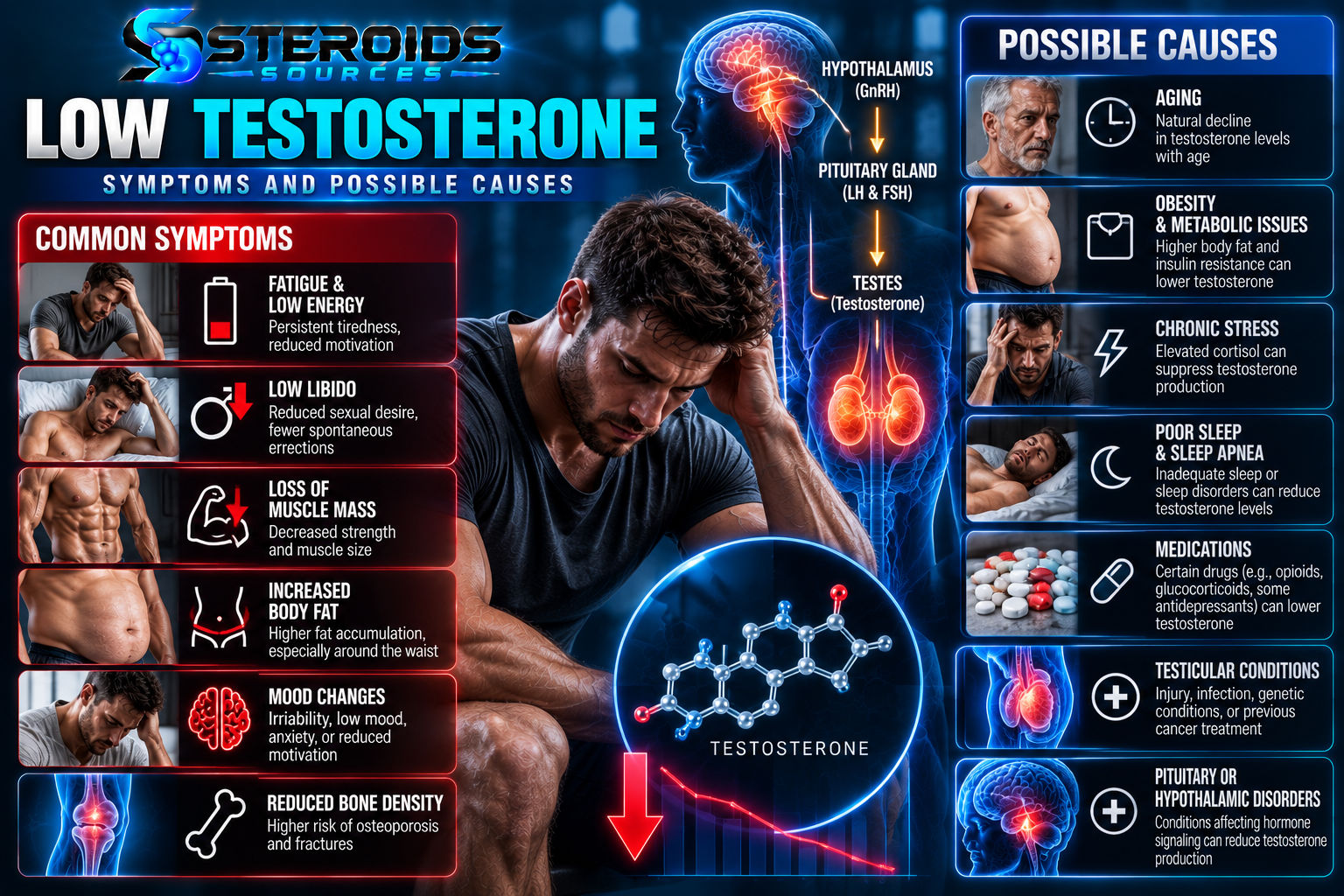
Low testosterone, also called testosterone deficiency or hypogonadism when the relevant clinical criteria are met, occurs when testosterone production or action is insufficient for normal physiological function.
A low laboratory result alone does not always establish hypogonadism. Diagnosis generally requires compatible symptoms or signs together with consistently low testosterone concentrations confirmed using appropriate testing.
Common symptoms of low testosterone
Possible symptoms include:
- Reduced sexual desire.
- Fewer spontaneous or morning erections.
- Erectile difficulties.
- Reduced energy or persistent fatigue.
- Loss of muscle mass or strength.
- Reduced bone density.
- Low mood or reduced motivation.
- Reduced body or facial hair in some cases.
- Fertility problems.
- Anemia without another clear explanation.
These symptoms vary from person to person. Some individuals with low testosterone have few noticeable symptoms, while others experience several.
Fatigue, weight gain, poor concentration, and low mood are particularly nonspecific. They can be associated with inadequate sleep, obstructive sleep apnea, depression, nutritional deficiencies, thyroid disorders, chronic illness, or medication use.
What causes low testosterone?
Low testosterone can arise from problems affecting the testes or the brain structures that regulate hormone production.
Primary hypogonadism occurs when the testes cannot produce adequate testosterone despite stimulation from LH. Potential causes include certain genetic conditions, testicular injury, chemotherapy, radiation, and some infections or diseases affecting the testes.
Secondary hypogonadism occurs when the hypothalamus or pituitary gland does not provide adequate hormonal stimulation. Potential causes include pituitary disorders, certain medications, severe illness, and other conditions affecting the regulatory system.
Testosterone levels can also be temporarily affected by acute illness, sleep deprivation, significant calorie restriction, and other physiological stressors. Obesity and some metabolic conditions are associated with lower testosterone concentrations, but the underlying cause and the appropriate treatment must be assessed individually.
Does testosterone naturally decline with age?
Testosterone concentrations may decline with age, but the pattern varies considerably. Not every older man develops testosterone deficiency, and aging alone does not establish a medical indication for testosterone treatment.
The distinction matters because symptoms commonly attributed to low testosterone—such as fatigue, reduced muscle mass, and changes in sexual function—may have several causes.
A clinician should assess symptoms, repeat appropriate measurements, and investigate possible contributing conditions rather than diagnosing deficiency from age alone.
4. Testosterone Levels and Blood Tests
A testosterone blood test can help determine whether hormone levels are low, but correct interpretation requires appropriate timing, reliable laboratory methods, and clinical context.
When should testosterone be tested?
For adult men being evaluated for suspected testosterone deficiency, guidelines commonly recommend measuring total testosterone in the morning, when levels are generally higher, and repeating the measurement on a separate morning to confirm a low result.
Testing may be affected by food intake, sleep, acute illness, medications, and the timing of the sample. A clinician can advise on the correct preparation for the particular test and circumstances.
A diagnosis should not be made from one borderline result without considering the broader picture.
What is a normal testosterone level?
There is no single number that can be applied universally across all laboratories, ages, testing methods, and clinical situations. Laboratories use reference intervals, and professional guidelines differ in some details about diagnostic thresholds.
For that reason, a testosterone result should be interpreted using the laboratory’s reference range and the patient’s symptoms and medical history. A value within the reference range does not automatically rule out every hormone-related problem, and a result outside the range does not automatically establish a need for treatment.
Total testosterone
Total testosterone is generally the first test used when evaluating suspected testosterone deficiency. If the result is clearly normal and the clinical picture does not suggest deficiency, further testing may not be necessary.
When the result is low or borderline, repeating the test and investigating possible causes can help establish whether the finding is persistent.
Free testosterone and SHBG
Free testosterone may be useful when total testosterone is near the lower limit of normal or when SHBG is likely to be altered.
SHBG can be affected by several factors, including age, thyroid status, liver conditions, obesity, and certain medications. A change in SHBG can influence total testosterone without producing an equivalent change in free testosterone.
Free testosterone measurements also depend on the assay or calculation used. Results should therefore be interpreted with the method and clinical context in mind.
LH and FSH
LH and FSH help clinicians investigate the cause of confirmed testosterone deficiency.
- Elevated LH can suggest that the testes are not responding adequately to hormonal stimulation.
- Low or inappropriately normal LH can suggest a problem involving the hypothalamus or pituitary.
- FSH provides additional information about the reproductive system and sperm-production function.
Further tests may be appropriate depending on the results, symptoms, and suspected cause.
Other tests that may be considered
Depending on the clinical situation, a clinician may assess prolactin, thyroid function, iron status, blood count, metabolic health, or other markers. If fertility is a concern, semen analysis may be relevant.
The goal is not simply to obtain a testosterone number. It is to determine whether a clinically meaningful deficiency exists, identify its cause, and decide whether treatment is appropriate.
5. Testosterone Benefits for Muscle Growth and Performance
Testosterone has established effects on muscle and other tissues, but the benefits of medical treatment must be distinguished from the effects and risks of nonmedical anabolic steroid use.
Testosterone replacement therapy
For people with confirmed testosterone deficiency, medically supervised TRT can help restore testosterone concentrations to an appropriate range and improve certain deficiency-related symptoms.
Potential benefits may include improved sexual desire, correction of some forms of anemia, increased or maintained lean mass, and benefits for bone density in selected patients. Not every person experiences all these outcomes, and improvements in mood, energy, physical function, or sexual performance vary.
TRT is not intended to create supraphysiological testosterone levels. The objective is to treat the underlying deficiency while monitoring effectiveness and adverse effects.
Testosterone and muscle growth
Testosterone supports muscle protein metabolism and can influence muscle size and strength. These effects help explain why testosterone and related anabolic-androgenic steroids are used nonmedically in bodybuilding.
However, the presence of anabolic effects does not make testosterone a safe shortcut. Nonmedical use may involve hormone levels well above the physiological range and can suppress natural testosterone production, impair fertility, increase hematocrit, and produce other health effects.
Claims about guaranteed muscle gain, specific strength improvements, or predictable results should be treated cautiously. Outcomes vary, and the risks cannot be reliably estimated from online testimonials alone.
Testosterone and fat loss
Testosterone influences body composition, but it is not an approved standalone weight-loss medication. Changes in lean mass can affect body weight without necessarily producing a corresponding reduction in body fat.
For people with confirmed deficiency, treating the condition may improve some aspects of body composition. For people with normal testosterone levels, taking additional testosterone is not a proven substitute for a sustainable nutrition and exercise plan.
Does higher testosterone always mean better performance?
No. Testosterone has dose-dependent effects, but higher concentrations do not automatically translate into proportionally greater health or performance benefits.
Excessive androgen exposure can produce adverse effects involving fertility, skin, hair, blood pressure, red blood cell production, mood, and other systems. There is also no single testosterone concentration that guarantees a particular athletic outcome.
Training quality, recovery, nutrition, genetics, and overall health remain important.
6. Testosterone Side Effects and Health Risks
Testosterone is a biologically active hormone, and treatment can affect several organ systems. The type and likelihood of adverse effects depend on the formulation, dose, treatment duration, baseline health, other medications, and individual susceptibility.
Nonmedical use can involve additional risks because it may produce excessive hormone exposure and may be combined with other performance-enhancing drugs.
Suppression of natural testosterone production
When testosterone is supplied from an external source, feedback mechanisms can reduce GnRH, LH, and FSH. As a result, the testes may produce less testosterone internally.
This suppression can lead to testicular shrinkage and reduced sperm production. After treatment is discontinued, recovery varies and may take an extended period. Recovery is not guaranteed to be immediate or complete, particularly after prolonged nonmedical use.
Fertility problems
External testosterone can significantly reduce sperm production and may cause infertility while treatment is ongoing. This is an important consideration for people who may want biological children.
Testosterone replacement should not be treated as a fertility medication. Anyone planning to conceive in the near future should discuss reproductive goals with a clinician before starting treatment. Alternative approaches may be considered in selected cases, depending on the cause of the hormone problem.
Elevated hematocrit
Testosterone can stimulate red blood cell production. If hematocrit rises excessively, blood viscosity may increase and the result can require medical intervention.
A complete blood count is therefore an important part of monitoring appropriate testosterone treatment. People should not assume that the absence of symptoms means their blood count is safe.
Blood pressure and cardiovascular considerations
Current regulatory information recognizes that testosterone products can increase blood pressure. The FDA announced class-wide labeling changes in 2025 after reviewing cardiovascular safety data and blood-pressure studies, and further labeling updates followed in 2026. These developments highlight the importance of checking current product-specific prescribing information.
The cardiovascular evidence requires nuance. In the TRAVERSE trial, conducted in a particular population of men with hypogonadism and elevated cardiovascular risk using a specified testosterone gel, major adverse cardiovascular events were not higher than with placebo. That finding does not establish that every formulation, every patient population, or supraphysiological bodybuilding use carries the same risk.
Fluid retention can also be problematic for people with certain heart, kidney, or liver conditions. Blood pressure and overall cardiovascular risk should be assessed as part of appropriate care.
Acne, oily skin, and hair loss
Testosterone can increase sebaceous gland activity, leading to oily skin and acne. In genetically susceptible people, androgen exposure may contribute to male-pattern scalp hair loss.
The effects vary because hair follicles respond differently depending on their location, local enzyme activity, and genetic factors.
Gynecomastia and estrogen-related effects
Some testosterone is converted into estradiol through aromatase. Changes in this pathway can contribute to breast tenderness or gynecomastia in some individuals.
Estradiol is also important for bone health and other normal functions. Attempting to eliminate estrogen without a medical indication can cause additional problems and is not a routine requirement for everyone receiving testosterone.
Mood and sleep-related effects
Some people report changes in mood, irritability, or sleep during testosterone treatment, although the relationship can be influenced by many factors. Excessive androgen use may carry additional psychological and physical risks.
Testosterone may also worsen sleep apnea in some people, particularly those with relevant risk factors. Anyone with loud snoring, witnessed breathing pauses, or severe daytime sleepiness should discuss these symptoms with a healthcare professional.
Prostate-related considerations
Prostate assessment depends on age, symptoms, risk factors, and the applicable clinical guidance. Testosterone treatment requires individualized consideration for people with known or suspected prostate disease.
It is inaccurate to claim that testosterone inevitably causes prostate cancer, but it is also inappropriate to dismiss prostate-related precautions. People with relevant symptoms or medical history should discuss the benefits, uncertainties, and monitoring options with their clinician.
Other precautions
Testosterone may be unsuitable or require special care in people with certain conditions, including elevated hematocrit, untreated severe sleep apnea, uncontrolled heart failure, specific prostate or breast cancers, and certain thrombotic risks. The relevant contraindications depend on the product and local prescribing information.
Testosterone is not appropriate during pregnancy because of the potential for harm to fetal development. The specific formulation and route of administration also influence the possible adverse effects.
7. Testosterone Treatment, Natural Production, and Safer Decisions
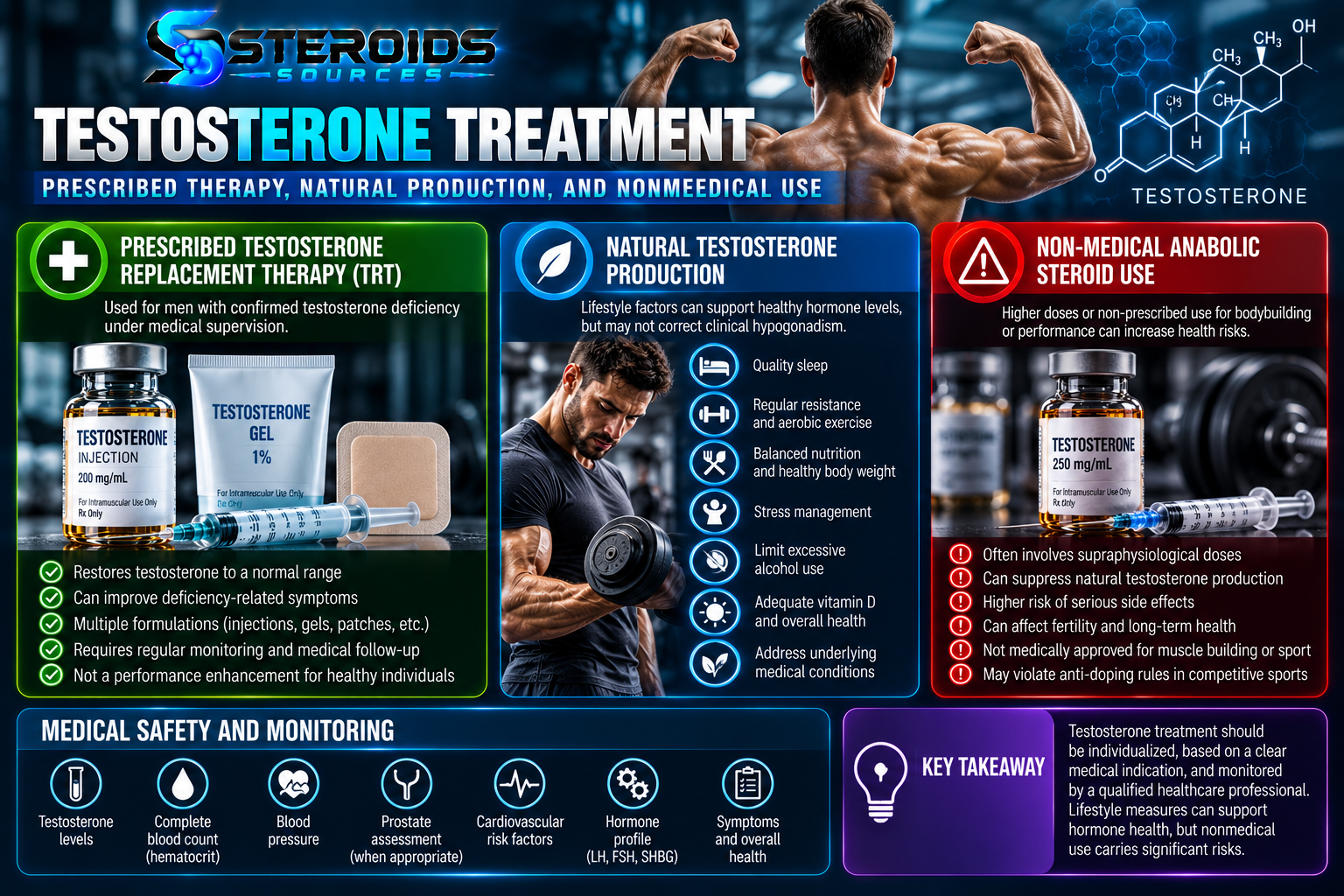
Testosterone treatment is most appropriate when there is a clear clinical indication and a plan to assess benefits, risks, and response. It should not be started simply because someone wants to gain muscle, improve energy, or reverse normal aging.
What is testosterone replacement therapy?
TRT is prescribed to treat clinically confirmed testosterone deficiency. Depending on the country and product, available formulations may include injections, gels, patches, and other delivery systems.
Each formulation has different practical considerations, absorption characteristics, adverse effects, and monitoring needs. The appropriate option depends on the diagnosis, patient preference, local availability, and the clinician’s assessment.
The goal is to address the deficiency and improve relevant symptoms while avoiding unnecessary or excessive hormone exposure.
What should be checked before treatment?
Before testosterone therapy is initiated, assessment may include:
- Symptoms and medical history.
- Repeat morning testosterone measurements.
- LH and FSH, and additional tests where appropriate.
- Fertility goals.
- Complete blood count and hematocrit.
- Blood pressure and cardiovascular risk.
- Prostate-related assessment when appropriate.
- Other medical conditions and medications that may affect safety.
The precise evaluation depends on the person and the product being considered.
What monitoring is needed during treatment?
Monitoring helps establish whether treatment is working and whether adverse effects are developing. It may include testosterone concentrations, hematocrit, blood pressure, symptoms, and other tests based on individual risk.
The timing and frequency of monitoring depend on the formulation, treatment stage, laboratory results, and medical history. A prescriber should explain which changes need follow-up and when treatment may need adjustment or discontinuation.
Can testosterone levels be improved naturally?
If low testosterone is associated with reversible factors, addressing those factors may help improve hormone health. Potential measures include:
- Getting adequate, consistent sleep.
- Treating obstructive sleep apnea when present.
- Eating enough to support overall health and training.
- Maintaining a sustainable body weight.
- Engaging in regular resistance and aerobic exercise.
- Limiting excessive alcohol use.
- Reviewing medications and chronic health conditions with a clinician.
These steps support general health and may improve testosterone levels in some circumstances, but they are not guaranteed to correct clinically significant hypogonadism. Supplements marketed as testosterone boosters also vary in evidence and quality; a product’s marketing claims do not establish effectiveness.
Natural testosterone vs. anabolic steroid use
Natural testosterone production is regulated by feedback mechanisms. External testosterone and other anabolic-androgenic steroids can suppress those mechanisms, potentially reducing LH, FSH, testicular testosterone production, and sperm production.
Medically supervised replacement therapy aims to treat a diagnosed deficiency. Nonmedical anabolic steroid use often pursues physique or performance outcomes and may involve doses or combinations that have not been established as safe.
The two situations should not be treated as equivalent. A medical prescription does not eliminate all risk, and nonmedical use should not be portrayed as a routine or harmless extension of legitimate treatment.
Frequently Asked Questions About Testosterone
1. What is testosterone?
Testosterone is an androgen hormone involved in sexual development, libido, muscle and bone maintenance, red blood cell production, and other physiological functions. It is produced mainly by the testes in adult males, with smaller amounts produced elsewhere in the body.
2. What are the main benefits of testosterone?
Testosterone supports sexual function, muscle maintenance, bone health, and red blood cell production. For people with confirmed deficiency, medically supervised treatment may improve certain related symptoms, but benefits vary.
3. What are the symptoms of low testosterone?
Possible symptoms include reduced libido, fewer spontaneous erections, fatigue, reduced muscle mass, low mood, anemia, and reduced bone density. These symptoms have other possible causes, so laboratory testing and clinical assessment are needed.
4. How are testosterone levels tested?
A blood test measuring total testosterone is generally the starting point. For suspected deficiency in adult men, testing is commonly performed in the morning and repeated on a separate occasion if the first result is low.
5. What is a normal testosterone level?
Reference ranges vary by laboratory and testing method. Results should be interpreted alongside symptoms, medical history, testing conditions, and the laboratory’s reference interval rather than relying on a single universal number.
6. Does testosterone increase muscle mass?
Testosterone supports muscle development and maintenance. However, the results depend on baseline hormone status, training, nutrition, and other factors, while nonmedical use can cause significant health risks.
7. What are the side effects of testosterone injections?
Potential effects include acne, fluid retention, increased hematocrit, blood pressure changes, suppression of natural testosterone production, and reduced sperm production. The risk profile depends on the formulation, treatment plan, and individual health.
8. Can testosterone treatment affect fertility?
Yes. External testosterone can suppress the hormonal signals required for normal sperm production and may cause infertility during treatment. People planning to conceive should discuss this before beginning therapy.
9. Can testosterone levels be improved naturally?
Adequate sleep, exercise, appropriate nutrition, management of excess body weight, and treatment of underlying conditions may help some people. These measures do not replace medical evaluation when a significant hormone deficiency is suspected.
10. What is the difference between TRT and anabolic steroid use?
TRT is prescribed to treat a confirmed medical deficiency with individualized monitoring. Nonmedical anabolic steroid use generally aims to improve physique or performance and may involve excessive hormone exposure, increasing the likelihood of adverse effects.
Final Verdict: Understand Testosterone Before Considering Treatment
Testosterone is essential to several physiological processes, including sexual function, muscle and bone maintenance, and red blood cell production. Low testosterone can cause meaningful symptoms, but symptoms alone do not establish a diagnosis, and not everyone who wants more muscle or energy needs hormone treatment.
For people with confirmed testosterone deficiency, medically supervised TRT may provide important benefits. Treatment still requires individualized assessment and monitoring, particularly for fertility, hematocrit, blood pressure, and other potential adverse effects.
For bodybuilding and performance purposes, the risks are different when testosterone is used without a medical indication or at excessive levels. Claims of guaranteed muscle growth, improved well-being, or harmless long-term use should be treated skeptically.
The most reliable approach is to understand the role of testosterone, confirm suspected deficiency with appropriate testing, investigate possible causes, and make treatment decisions with a qualified healthcare professional.