


RETATRUTIDE DOSING

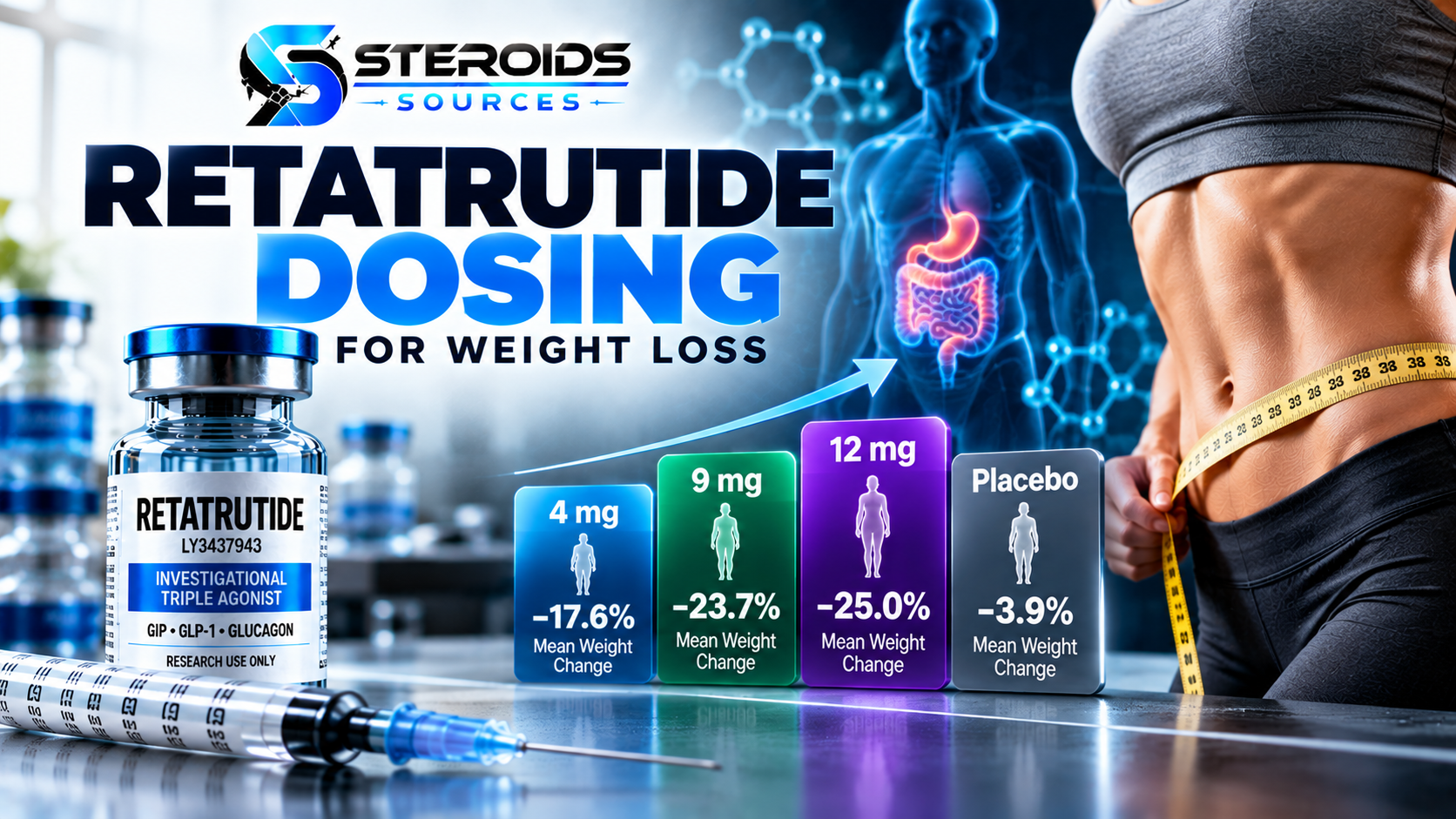
Retatrutide Dosing: What You Need to Know
Retatrutide has become one of the most closely watched investigational weight-loss drugs because clinical trials have produced substantial reductions in body weight.
That has also created a huge amount of online discussion about retatrutide dosing.
But there is an important distinction between a clinical-trial dosing schedule and an approved prescription dosing regimen.
As of October 2026, retatrutide remains an investigational drug rather than an FDA-approved treatment. The FDA has specifically stated that retatrutide has not been found safe and effective for any condition and cannot be used in compounding under federal law.
Lilly announced that it plans to submit a Biologics License Application for retatrutide in 2027.
So when you see a “retatrutide dosing chart” online, it’s important to determine whether the information comes from an actual clinical trial or from an unofficial source.
This article focuses on the dosing schedules that have actually been studied in clinical research.
What Is Retatrutide?
Retatrutide, also known as LY3437943, is a once-weekly injectable triple hormone receptor agonist.
Unlike medications such as semaglutide, which primarily target the GLP-1 receptor, or tirzepatide, which targets GLP-1 and GIP receptors, retatrutide activates three pathways:
- GIP
- GLP-1
- glucagon
This triple-agonist mechanism is one reason researchers have become interested in its potential effects on body weight and metabolic health.
Retatrutide is being developed primarily for obesity and related metabolic conditions.
Is Retatrutide FDA Approved?
No.
This is probably the most important fact to understand before looking at dosing.
Retatrutide is still investigational in the United States. Positive Phase 3 results have been reported, but clinical-trial success does not automatically make a drug approved for general prescription use. Lilly has said it plans to submit its application to the FDA in 2027.
The FDA has also warned about the marketing and distribution of unapproved retatrutide products and states that retatrutide cannot legally be used in compounding under federal law.
Therefore, there is currently no FDA-approved retatrutide label providing a standard patient dosing regimen.
Retatrutide Dosing Chart: Clinical Trial Schedules
The most useful way to understand retatrutide dosing is to look at what researchers actually studied.
In the 2026 Phase 3 TRIUMPH-1 trial, participants received one of three target doses:
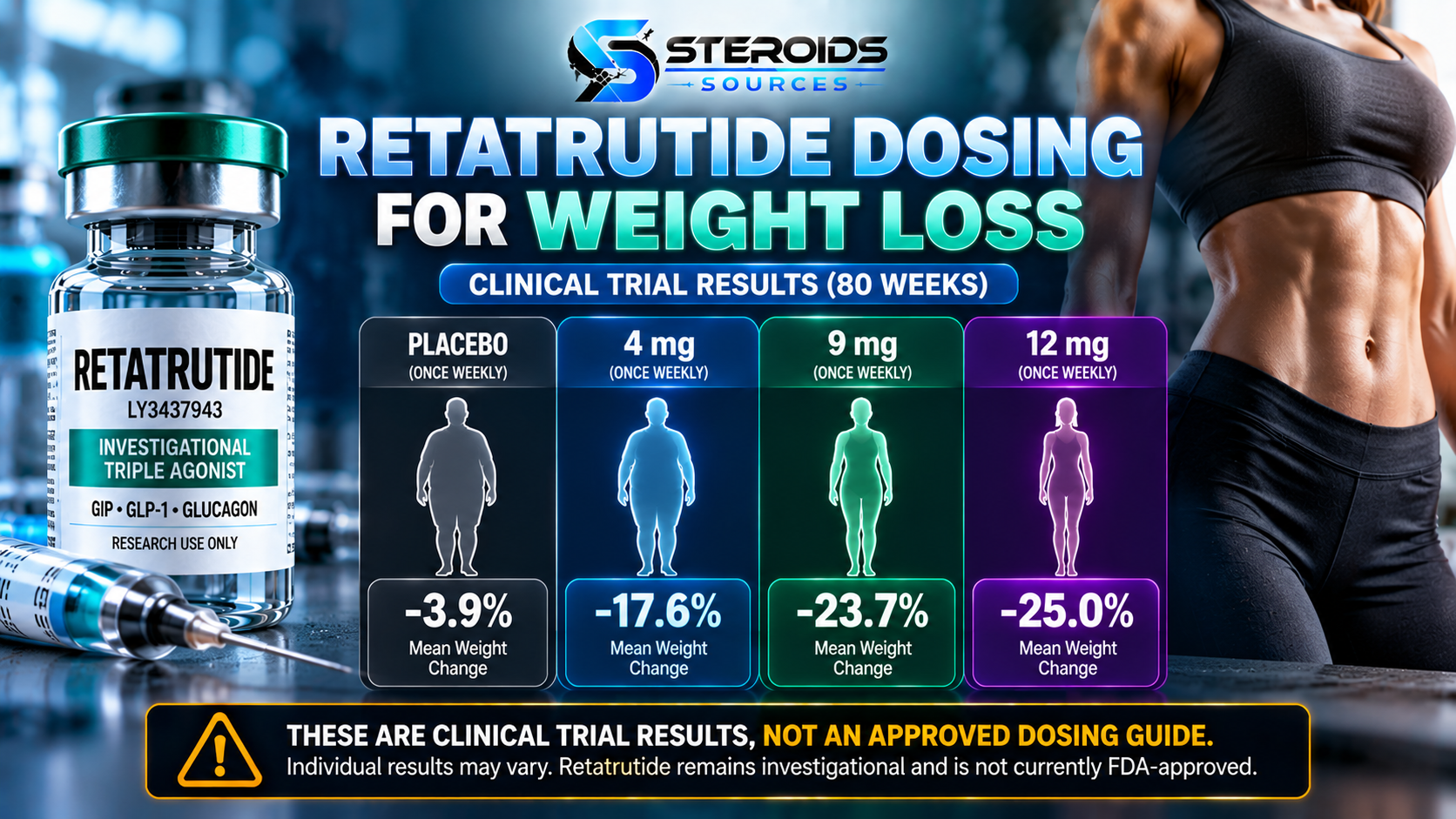
The escalation occurred in four-week steps in the trial.
This is clinical-trial information, not a recommendation for self-treatment.
The distinction matters because trial participants were carefully selected, monitored, and followed under a research protocol.
Retatrutide Dosing Schedule
The Phase 3 TRIUMPH-1 program used a gradual escalation approach.
For the 4 mg target group, participants started at 2 mg once weekly before reaching the 4 mg target.
The 9 mg group followed a sequence of 2 mg, 4 mg, 6 mg, and then 9 mg.
The 12 mg group followed 2 mg, 4 mg, 6 mg, 9 mg, and finally 12 mg.
Each escalation step occurred every four weeks in the trial.
The reason gradual escalation is important is that gastrointestinal adverse effects were particularly common during dose escalation in earlier retatrutide research.
What Did the Earlier Retatrutide Trial Study?
Before the Phase 3 program, a Phase 2 study published in the New England Journal of Medicine investigated several retatrutide dosing strategies.
Participants received:
- 1 mg once weekly
- 4 mg once weekly
- 8 mg once weekly
- 12 mg once weekly
Some of the higher-dose groups started at 2 mg or 4 mg and then increased their dose every four weeks.
The study lasted 48 weeks of treatment followed by a four-week safety follow-up.
This trial is particularly useful because it demonstrated why researchers became interested in gradual dose escalation.
Why Is Retatrutide Dose Escalated?
Dose escalation isn’t unique to retatrutide.
For drugs affecting appetite and gastrointestinal function, starting at a higher dose can increase adverse effects.
In the Phase 2 retatrutide trial, gastrointestinal adverse events—including nausea, diarrhea, vomiting, and constipation—were among the most common side effects.
They occurred more frequently at higher doses and were particularly common during dose escalation.
The researchers also found that using a lower 2 mg starting dose partially reduced gastrointestinal adverse effects compared with starting at 4 mg.
This is one reason it would be misleading to look at the highest studied dose and assume that everyone should start there.
Retatrutide Dosing for Weight Loss
The Phase 3 TRIUMPH-1 trial provides the most important recent evidence.
Adults with obesity or overweight received 4 mg, 9 mg, or 12 mg once weekly, with gradual escalation from a 2 mg starting dose.
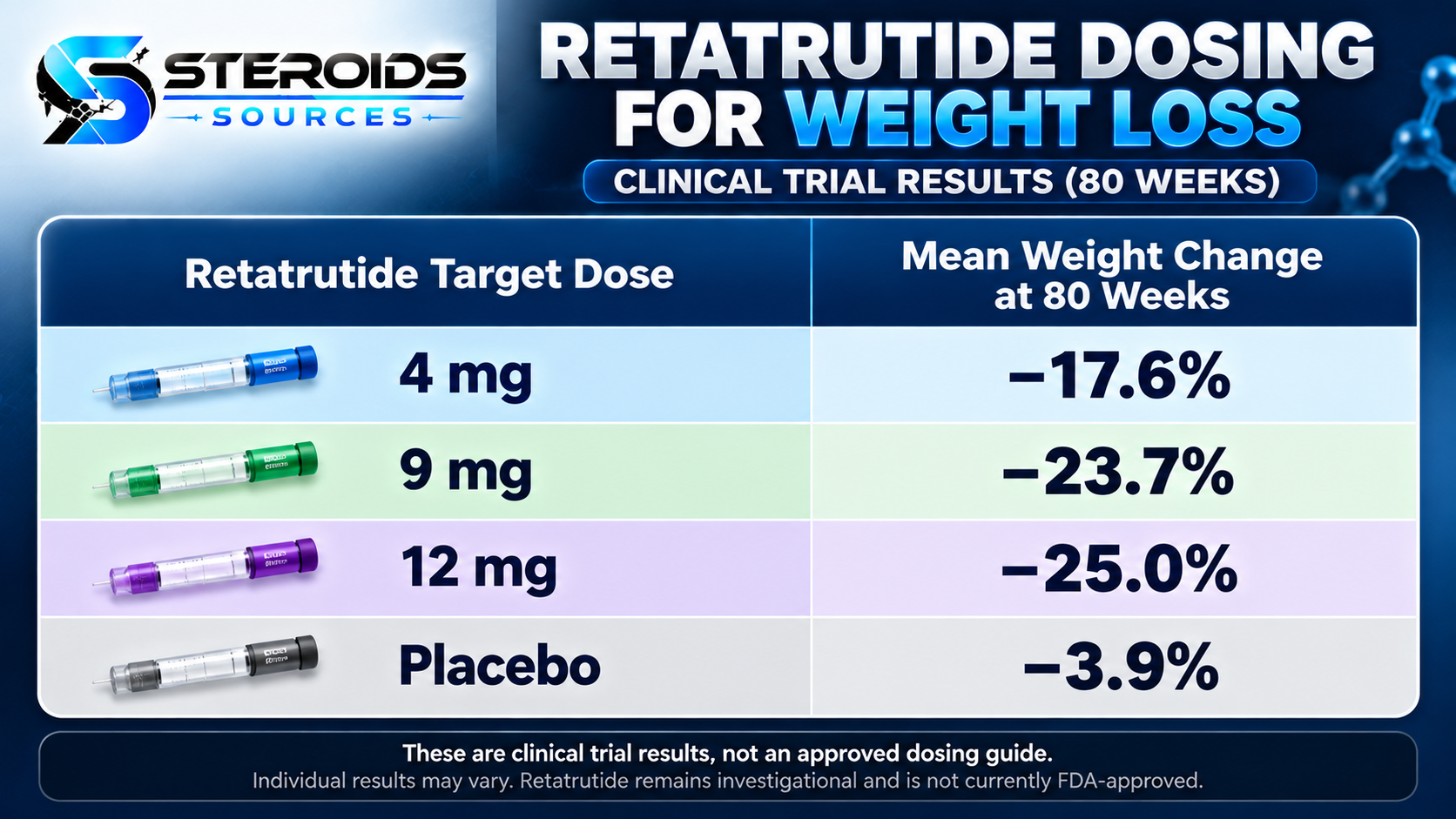
After 80 weeks, the reported mean weight changes were:
How Effective Is the 12 mg Dose?
The highest Phase 3 target dose produced the greatest average weight reduction in TRIUMPH-1.
At 80 weeks, the 12 mg group had a mean weight reduction of 25.0%, compared with 3.9% with placebo.
Lilly’s additional reporting from the trial stated that 45.3% of participants receiving 12 mg achieved at least 30% weight loss.
That doesn’t mean 12 mg is automatically the “best dose” for every person.
Clinical trials evaluate average effects across groups. Individual tolerability, health status, treatment goals, and adverse effects can differ substantially.
What Happens During Retatrutide Dose Escalation?
The purpose of escalation is primarily to allow participants to reach their assigned target dose while managing tolerability.
The Phase 2 study found that gastrointestinal adverse events were particularly common during escalation and were generally mild to moderate.
Reported effects included:
- nausea
- diarrhea
- vomiting
- constipation
Higher target doses generally produced more gastrointestinal adverse events.
This is an important point when interpreting online retatrutide dosing discussions.
A person saying that they “tolerated 12 mg” does not establish that another person will tolerate the same exposure.
Retatrutide Dosing vs Tirzepatide Dosing
Retatrutide and tirzepatide are sometimes discussed together because both are injectable metabolic drugs that can produce substantial weight loss.
But their dosing should not be treated as interchangeable.
Tirzepatide is an approved medication with an established prescribing label.
Retatrutide is still investigational, meaning there is currently no FDA-approved retatrutide prescribing label equivalent to the approved tirzepatide regimen.
Retatrutide’s clinical-trial protocols have used different target doses and escalation schedules than tirzepatide.
So:
Retatrutide dosing is not simply tirzepatide dosing with a different name.
Is Retatrutide Dosed Once a Week?
Yes, once-weekly subcutaneous administration has been used in the major clinical trials discussed above.
Both the Phase 2 and Phase 3 obesity trials administered retatrutide subcutaneously once weekly.
However, the fact that researchers studied once-weekly administration doesn’t mean an individual should obtain and administer an unapproved product outside a clinical trial.
What Are the Risks of Retatrutide?
Retatrutide isn’t risk-free.
The most consistently reported adverse effects have involved the gastrointestinal system.
In the Phase 2 study, nausea, diarrhea, vomiting, and constipation were common. Adverse events were generally more frequent at higher doses.
The trial also observed dose-dependent increases in heart rate that peaked around 24 weeks and declined afterward.
Other safety questions remain important because retatrutide is still undergoing clinical development.
That is precisely why clinical trials continue to evaluate different doses, patient populations, and longer-term outcomes.
Is Higher-Dose Retatrutide Better?
Not necessarily.
Higher doses produced greater average weight loss in the Phase 2 and Phase 3 studies, but higher doses can also increase adverse effects.
The Phase 2 trial showed a clear relationship between higher retatrutide doses and gastrointestinal adverse events.
A useful way to think about this is:
More drug exposure can produce more effect, but it can also produce more adverse effects.
The objective of a medical dosing regimen isn’t simply to find the largest possible dose.
It’s to establish an appropriate balance between effectiveness, tolerability, and safety.
Retatrutide Dosing Reddit: Should You Trust Online Protocols?
Reddit and other forums can be useful for understanding what people are discussing, but they aren’t substitutes for clinical evidence.
Online discussions may include:
- personal experiences
- unofficial dosing schedules
- products of uncertain purity
- self-reported side effects
- incomplete medical histories
- misunderstandings about milligrams versus concentration
A Reddit user’s experience cannot establish that a particular dosing schedule is safe or effective.
For retatrutide specifically, this matters even more because the drug remains investigational.
The FDA has warned about unapproved retatrutide products being marketed directly to consumers.
Retatrutide Dosing and Research Peptides
Another major issue is the growing market for products labeled as “research retatrutide.”
A research label does not turn an unapproved drug into an approved medicine.
Product purity, identity, concentration, sterility, storage conditions, and manufacturing quality can all become concerns outside controlled clinical research.
The FDA has taken enforcement action against companies marketing products containing retatrutide and has specifically raised concerns about unapproved products.
This is an important distinction for anyone researching retatrutide online.
What Is the Official Retatrutide Dose?
At present, there is no FDA-approved official patient dose for retatrutide.
There are, however, studied clinical-trial doses.
The most important recent Phase 3 targets are:
4 mg, 9 mg, and 12 mg once weekly, with participants starting at 2 mg and escalating at four-week intervals according to the assigned trial regimen.
Those numbers describe the research protocol.
They should not be interpreted as a personalized prescription or recommendation for self-administration.
Retatrutide Dosing: The Bottom Line
Retatrutide has produced unusually large weight-loss results in clinical trials, which explains the enormous interest in its dosing.
But there is a major difference between studied dosing and approved dosing.
As of October 2026, retatrutide remains investigational in the United States. Lilly has reported positive Phase 3 results and plans to submit an application to the FDA in 2027, but an approved retatrutide prescribing label does not yet exist.
The Phase 3 TRIUMPH-1 trial studied 4 mg, 9 mg, and 12 mg once weekly, with a 2 mg starting dose and gradual escalation every four weeks.
The most important takeaway is therefore:
Clinical-trial dosing is not the same thing as a recommended self-treatment protocol.
Until regulators approve retatrutide and provide an official prescribing label, online “retatrutide dosing charts” should be treated as potentially misleading unless they clearly identify the clinical trial and its protocol.
FAQ
What is the dosing for retatrutide?
Clinical trials have studied several once-weekly doses. In the 2026 Phase 3 TRIUMPH-1 trial, target doses were 4 mg, 9 mg, and 12 mg, with participants starting at 2 mg and escalating every four weeks.
What is the retatrutide dosing schedule?
The Phase 3 schedule started participants at 2 mg once weekly, followed by stepwise increases every four weeks until their assigned target dose of 4, 9, or 12 mg.
Is retatrutide FDA approved?
No. As of October 2026, retatrutide remains investigational. The FDA has stated that it has not been found safe and effective for any condition.
Is retatrutide dosing the same as tirzepatide?
No. The drugs have different pharmacology and retatrutide does not currently have an FDA-approved prescribing regimen.
How often is retatrutide injected?
Clinical trials have administered retatrutide by subcutaneous injection once weekly.
What was the highest retatrutide dose studied in Phase 3 obesity trials?
The TRIUMPH-1 Phase 3 trial studied a 12 mg target dose.
Does a higher retatrutide dose produce more weight loss?
In TRIUMPH-1, average weight loss was greater at the 9 mg and 12 mg target doses than at 4 mg, but higher exposure can also increase adverse effects.