


tirzepatide peptide


Tirzepatide Peptide: What It Is, How It Works and What You Should Know
The tirzepatide peptide has become a major topic in weight management, metabolic health, and pharmaceutical research. It is widely discussed because of its effects on appetite, blood glucose regulation, and body weight. Unlike many experimental peptides promoted through bodybuilding and research chemical markets, tirzepatide is also the active ingredient in approved prescription medicines.
However, not every product advertised as tirzepatide is equivalent to an approved medication. Prescription formulations, compounded medicines, and products marketed online as research peptides can differ in their regulatory status, manufacturing controls, and evidence supporting their use.
Understanding these distinctions is essential before evaluating the compound’s benefits, dosage, side effects, or price.
Tirzepatide works by activating two hormone receptors involved in metabolic regulation: the glucose-dependent insulinotropic polypeptide (GIP) receptor and the glucagon-like peptide-1 (GLP-1) receptor. This dual activity influences blood sugar regulation, appetite, food intake, and other physiological processes.
In the United States, tirzepatide is the active ingredient in Mounjaro, which is approved for specific uses involving type 2 diabetes, and Zepbound, which is approved for chronic weight management in eligible adults and for certain adults with obesity and obstructive sleep apnea. Approved indications and product availability vary by country and can change over time.
This guide explains what tirzepatide is, whether it is a peptide, how it works, its potential benefits, dosage considerations, side effects, long-term safety questions, pricing, and what to understand when encountering tirzepatide products for sale.
What Is Tirzepatide?
Tirzepatide is a synthetic peptide-based medicine designed to activate both GIP and GLP-1 receptors. These receptors are involved in the body’s regulation of glucose metabolism and appetite.
A peptide is a chain of amino acids connected by peptide bonds. Amino acids are the building blocks used to make peptides and proteins. Some medicines use peptide structures because they can interact with specific receptors involved in normal biological processes.
Tirzepatide is not an anabolic steroid, a selective androgen receptor modulator (SARM), or a conventional bodybuilding supplement. It is a prescription medicine with specific medical indications and a clinically studied mechanism of action.
Its development is particularly important because it combines activity at two incretin hormone receptors in a single molecule. Incretin hormones help the body respond to food intake and regulate glucose metabolism.
Is tirzepatide a peptide?
Yes. Tirzepatide is a synthetic peptide-based drug. It contains a chain of amino acids and has been engineered to interact with GIP and GLP-1 receptors.
However, the fact that tirzepatide is a peptide does not mean every product labeled as a tirzepatide peptide is a legitimate medicine. The word peptide describes a broad category of molecules, not a guarantee of purity, quality, effectiveness, or safety.
Approved tirzepatide medicines are manufactured and evaluated for specific medical uses. A product advertised online as a research peptide may not have undergone the same review or manufacturing controls.
What peptide is tirzepatide?
The search phrase what peptide is tirzepatide often reflects confusion about its identity. Tirzepatide is itself the name of the active peptide-based drug. It is not simply another name for semaglutide, BPC-157, TB-500, or another commonly discussed peptide.
Although tirzepatide and semaglutide both act on the GLP-1 receptor, their pharmacology is not identical. Tirzepatide activates both GIP and GLP-1 receptors, while semaglutide acts as a GLP-1 receptor agonist.
These differences help explain why the medicines have separate clinical evidence, prescribing information, and dosing schedules. They should not be considered interchangeable on the basis of their shared relationship to GLP-1.
How Does Tirzepatide Work?
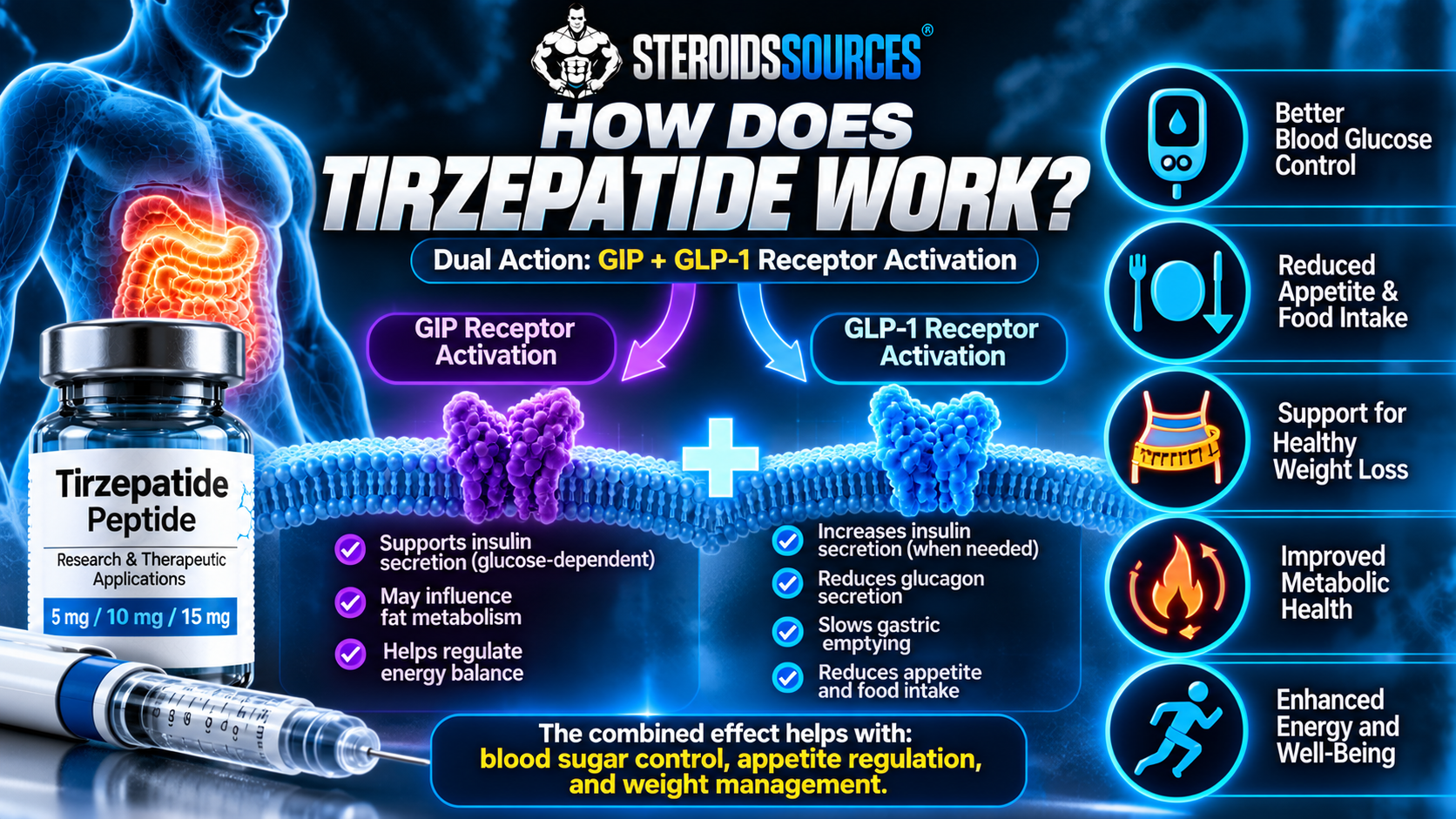
Tirzepatide acts on two hormone receptors involved in metabolic regulation: GIP and GLP-1. These pathways influence the body’s response to food, insulin secretion, appetite, and glucose control.
Its effects depend on the interaction between these pathways rather than on a single mechanism.
1. GIP receptor activation
GIP stands for glucose-dependent insulinotropic polypeptide. It is an incretin hormone released in response to food intake.
GIP receptor activation contributes to glucose-dependent insulin secretion and influences other metabolic processes. Tirzepatide is designed to activate this receptor as part of its dual-action mechanism.
2. GLP-1 receptor activation
GLP-1 stands for glucagon-like peptide-1. This hormone is involved in glucose regulation and appetite-related signaling.
Activating the GLP-1 receptor can increase insulin secretion when blood glucose is elevated, reduce inappropriate glucagon secretion, and slow gastric emptying. The slowing of gastric emptying can contribute to feelings of fullness, particularly during treatment initiation and dose escalation.
The effect on appetite and food intake is one reason tirzepatide can help eligible patients lose weight.
3. Appetite and food intake
Tirzepatide can affect appetite regulation and reduce food intake. Some people experience less hunger, earlier fullness during meals, or fewer urges to eat between meals.
These effects vary among individuals. They are not a guarantee of a particular amount of weight loss, and the response can be influenced by treatment duration, tolerability, medical history, nutrition, physical activity, and other factors.
4. Blood glucose regulation
Tirzepatide can improve blood glucose control in people with type 2 diabetes. Its glucose-dependent effects on insulin secretion are part of its therapeutic action.
It should not be viewed as a general-purpose metabolic enhancer for everyone. Whether it is appropriate depends on a person’s health status, medical indication, and clinical assessment.
Tirzepatide Benefits: What Does the Evidence Show?
The keyword tirzepatide benefits covers several outcomes, but it is important to distinguish benefits demonstrated in clinical trials from broader claims made in online fitness and weight-loss communities.
The strongest evidence concerns its approved medical uses, particularly blood glucose management in type 2 diabetes and chronic weight management in eligible patients.
1. Weight management
Tirzepatide has demonstrated substantial weight-loss effects in clinical trials involving people treated under defined study conditions.
Its effects on appetite, food intake, and metabolic regulation can help eligible patients reduce body weight when used as prescribed alongside appropriate lifestyle measures.
However, clinical trial results describe groups of participants, not a guaranteed result for every individual. The amount of weight lost varies, and treatment can be limited by side effects, medical contraindications, or other factors.
Weight management is also a long-term process. Medication may be one part of a broader plan that includes nutrition, physical activity, behavioral support, and ongoing medical care.
2. Blood glucose management
Tirzepatide is used in the treatment of type 2 diabetes under the appropriate prescribing indication. It can improve glycemic control through its effects on insulin secretion, glucagon regulation, and other metabolic processes.
It is not a substitute for an individualized diabetes care plan. People taking insulin or certain other glucose-lowering medicines may require additional monitoring because combining treatments can affect the risk of low blood sugar.
3. Effects on appetite
Reduced appetite and increased fullness are common experiences during tirzepatide treatment. These effects may make it easier for some patients to reduce food intake.
However, appetite suppression should not be confused with a guarantee of improved nutrition. A person can consume too little food or fail to obtain adequate protein, vitamins, minerals, and other nutrients while losing weight.
A healthcare professional can help assess nutritional needs and whether the rate of weight loss is appropriate.
4. Certain obesity-related health outcomes
Weight reduction can improve some health measures associated with excess body weight. Tirzepatide has also received an approved indication in the United States for moderate to severe obstructive sleep apnea in adults with obesity.
The precise indication depends on the product and current local prescribing information. It is important not to assume that evidence for one approved use establishes effectiveness for unrelated conditions.
5. What tirzepatide does not establish
Tirzepatide is not approved simply because someone wants to become leaner for bodybuilding, improve appearance, or accelerate a fitness transformation.
It is also not an anabolic agent designed to build muscle. Weight loss can include losses of both fat mass and lean mass, so preserving muscle during weight reduction remains an important consideration.
Claims that tirzepatide guarantees a particular body-fat percentage, prevents muscle loss, or provides a specific cosmetic result go beyond what the medicine can promise.
Is Tirzepatide Mounjaro?
The question is tirzepatide mounjaro is common because the two names are frequently used in discussions about diabetes and weight loss.
Mounjaro is a brand name for a prescription medicine containing tirzepatide. Tirzepatide is the active ingredient; Mounjaro is one branded product containing it.
In the United States, Mounjaro is approved for improving blood glucose control in adults with type 2 diabetes, alongside diet and exercise. Its exact approved uses and labeling can differ across countries.
Zepbound is another brand containing tirzepatide in the United States. It is approved for chronic weight management in eligible adults and for certain adults with obesity and obstructive sleep apnea.
Although these products contain the same active ingredient, their approved indications, packaging, and prescribing instructions may differ. Patients should use the product prescribed for their circumstances rather than assume that all tirzepatide products are interchangeable.
A product labeled simply as a “tirzepatide peptide” is not automatically Mounjaro or Zepbound. The active ingredient name alone does not verify the product’s source, quality, or regulatory status.
Tirzepatide Dosage for Weight Loss
The keyword tirzepatide dosage for weight loss requires careful handling because the correct schedule depends on the specific approved product, indication, current prescribing information, and the patient’s individual circumstances.
Tirzepatide is a prescription medicine. Dosing should be determined by the prescribing healthcare professional and followed according to the instructions for the exact product supplied.
Why treatment generally starts at a lower dose
Approved tirzepatide regimens use a gradual dose-escalation approach. The initial dose is intended to help the body adjust to treatment, particularly its gastrointestinal effects. Increases occur according to the prescribed schedule and the patient’s tolerability.
Starting at a higher dose, increasing too quickly, or repeating a dose incorrectly can increase the risk of adverse effects.
A dosing schedule should not be copied from an online forum, research peptide seller, or another person’s prescription. Individual medical circumstances and the formulation being used matter.
Is there one ideal dose for everyone?
No. A single dose cannot be assumed to be appropriate for every patient.
The right regimen depends on the prescribed indication, product labeling, treatment response, tolerability, other medicines, and relevant health conditions. The highest available dose is not automatically the best choice for an individual.
Patients should not increase, decrease, or repeat doses without guidance from the prescriber.
Why research peptide dosing is different
Products marketed online as research tirzepatide may be sold without the safeguards associated with approved prescription medicines. A label stating the amount of material in a vial does not establish a safe or effective human dose.
Unverified products may also differ in concentration, purity, identity, or formulation. Attempting to translate an approved medicine’s dosing instructions to an unapproved research product introduces additional uncertainty.
For these reasons, this article does not provide a self-administration protocol for research tirzepatide. Anyone prescribed tirzepatide should follow the instructions supplied by the prescribing clinician and dispensing pharmacy.
Tirzepatide Side Effects
The search term tirzepatide side effects is important because the medicine can cause adverse reactions, particularly involving the gastrointestinal system.
Some side effects are mild or improve as treatment continues, while others may require medical assessment or discontinuation under a clinician’s guidance.
Common gastrointestinal effects

Commonly reported side effects include:
- Nausea
- Diarrhea
- Vomiting
- Constipation
- Abdominal discomfort or pain
- Indigestion
- Reduced appetite
These effects can be more noticeable when treatment begins or when the dose increases. Their severity varies among individuals.
Persistent vomiting or diarrhea can contribute to dehydration. Anyone who cannot keep fluids down, develops severe or persistent symptoms, or feels significantly unwell should seek medical advice.
Abdominal pain and pancreatitis concerns
Severe or persistent abdominal pain requires prompt medical assessment, particularly when accompanied by vomiting or pain that radiates to the back.
Pancreatitis has been a safety concern considered in the prescribing information for tirzepatide. A person experiencing symptoms suggestive of pancreatitis should seek urgent medical evaluation rather than assume the symptoms are an ordinary treatment effect.
Gallbladder problems
Gallbladder-related events, including gallstones and inflammation of the gallbladder, have been reported with medicines used for weight management, including tirzepatide.
Rapid weight loss itself can also contribute to gallstone risk. Symptoms such as severe upper abdominal pain, fever, jaundice, or persistent vomiting warrant medical assessment.
Low blood sugar
Tirzepatide can contribute to hypoglycemia, especially when used with insulin or certain other diabetes medicines that can lower blood glucose.
Symptoms may include shakiness, sweating, dizziness, confusion, or weakness. Patients with diabetes should follow their clinician’s instructions for monitoring and managing blood glucose.
Injection-site reactions
Some patients experience redness, discomfort, itching, or other reactions where the medicine is injected.
A reaction may have different causes, including local irritation or an issue with the product. Severe swelling, spreading redness, fever, or signs of a serious allergic reaction require medical attention.
Allergic reactions
Serious hypersensitivity reactions are possible. Symptoms such as difficulty breathing, swelling of the face or throat, or severe widespread reactions require emergency medical care.
Tirzepatide Long Term Side Effects: What Is Known?
The phrase tirzepatide long term side effects reflects an important question: what risks may arise during extended treatment?
Tirzepatide has been studied in clinical trials and is used as a prescription medicine, but no medicine is free of uncertainty. Long-term safety must be evaluated using ongoing research, clinical experience, and updated prescribing information.
Thyroid C-cell tumor warning
The U.S. prescribing information for tirzepatide products includes a boxed warning based on thyroid C-cell tumors observed in rats. It is not known whether tirzepatide causes these tumors in humans.
In the United States, these products are contraindicated for people with a personal or family history of medullary thyroid carcinoma or with multiple endocrine neoplasia syndrome type 2 (MEN 2).
People should discuss their medical and family history with their prescriber before treatment. They should not dismiss this warning or assume that findings in animals prove the same effect occurs in humans; the human risk remains uncertain.
Gastrointestinal effects over time
Gastrointestinal symptoms may improve for some people, but ongoing nausea, constipation, diarrhea, vomiting, or poor food intake can affect quality of life and nutritional status.
Persistent symptoms should be discussed with the prescribing clinician. Severe symptoms should not be ignored merely because gastrointestinal effects are known to occur with tirzepatide.
Dehydration and kidney concerns
Severe gastrointestinal effects can lead to dehydration, which may affect kidney function, particularly in vulnerable individuals.
Maintaining appropriate fluid intake is important, but patients with medical conditions that affect fluid balance may need individualized advice.
Gallbladder and pancreatic concerns
Gallbladder events and pancreatitis are among the safety issues considered in tirzepatide prescribing information. These are not inevitable outcomes, but they are important reasons to seek assessment for concerning symptoms.
Weight loss and lean mass
Weight loss may involve reductions in fat mass and lean mass. The amount varies with the individual, the degree of weight loss, dietary intake, physical activity, and other factors.
For people concerned about muscle retention, adequate nutrition and appropriate resistance training may be useful components of a clinician-guided plan. Tirzepatide itself is not a muscle-preserving or muscle-building medicine.
Pregnancy and other medical considerations
Weight-loss treatment is not appropriate during pregnancy. Anyone who is pregnant, planning pregnancy, or could become pregnant should discuss tirzepatide with a qualified healthcare professional.
Other conditions and medicines may also affect whether treatment is appropriate. The prescriber should review the patient’s health history, current medication list, and relevant risks before prescribing.
Is Tirzepatide Safe?
The question is tirzepatide safe cannot be answered with a universal yes or no.
For appropriately selected patients, approved tirzepatide medicines have undergone clinical evaluation and regulatory review for specific indications. Their benefits and risks are described in the prescribing information, and treatment can be monitored by a healthcare professional.
That does not mean tirzepatide is appropriate for everyone or that adverse effects cannot occur. Safety depends on the patient’s medical circumstances, the prescribed indication, the product used, correct administration, and ongoing clinical assessment.
Approved medicines versus research products
An approved prescription product has been evaluated for quality, safety, and effectiveness for its approved uses. A product sold online as a research peptide may not have undergone equivalent evaluation.
The word “research” does not guarantee purity, and a product labeled with the correct chemical name is not necessarily authentic. A supplier’s claims or a certificate of analysis cannot independently establish that a product is safe for human use.
Compounded tirzepatide
Compounded medicines are not FDA-approved in the United States. Compounding may be appropriate in particular circumstances under applicable legal and professional requirements, but compounded products do not undergo the same premarket FDA review for safety, effectiveness, and quality as approved medicines.
The FDA has warned about risks involving unapproved GLP-1 products, including product quality concerns, fraudulent labeling, and dosing errors. Injectable products can also pose risks if they are incorrectly prepared, stored, or measured.
Patients should obtain prescription medicines through a legitimate clinical and pharmacy pathway and discuss any concerns about a compounded product with their prescriber and dispensing pharmacy.
Tirzepatide Peptide for Sale: What Should Buyers Understand?
Searches for tirzepatide peptide for sale and where to buy tirzepatide peptide can lead to several types of products, including approved prescription medicines, compounded products, and online listings marketed as research chemicals.
These categories are not equivalent.
Approved prescription products
Approved medicines are prescribed for specific indications and dispensed through appropriate healthcare and pharmacy channels. Their labels and instructions are designed for the approved product and intended use.
A legitimate prescription pathway includes assessment of whether the medicine is appropriate, review of relevant risks, and guidance on correct use.
Products marketed as research peptides
Some online sellers advertise tirzepatide as a research chemical or laboratory peptide. These products should not be assumed to be approved medicines or suitable for self-administration.
Potential concerns include inaccurate labeling, uncertain concentration, contamination, improper storage, and the absence of verified clinical instructions. A product’s low price or availability does not establish that it is safe or genuine.
How to assess seller claims
Be cautious of sellers that:
- Claim an unapproved product is identical to an approved prescription medicine without adequate evidence.
- Offer injectable products without requiring an appropriate prescription where one is legally required.
- Promise guaranteed weight loss or no side effects.
- Provide unclear manufacturer or pharmacy information.
- Use vague quality claims without verifiable supporting documentation.
- Sell products with inconsistent labeling or inadequate handling and storage information.
These warning signs do not independently prove that every seller is fraudulent, but they are reasons to avoid assuming that a product is legitimate.
Where to buy tirzepatide peptide
For medical treatment, the safer approach is to speak with a qualified healthcare professional about whether tirzepatide is appropriate and, if prescribed, obtain the medicine through a legitimate pharmacy channel.
A research peptide listing should not be treated as an alternative to a prescription medicine. If a seller advertises tirzepatide for self-directed weight loss without appropriate clinical oversight, the claims deserve particular scrutiny.
Tirzepatide Injection Price: What Affects Cost?
The keyword tirzepatide injection price covers several different cost questions. The price can vary according to the country, product brand, pharmacy, insurance coverage, dose, and eligibility for manufacturer or health-system assistance.
An approved branded prescription product may have a different cost from a compounded preparation. Research products may be advertised at lower prices, but a lower price does not establish equivalent quality, safety, or effectiveness.
Factors that influence price
Common factors include:
- Whether the product is an approved branded medicine.
- The country and local healthcare system.
- Insurance coverage or reimbursement eligibility.
- The prescribed dose and product presentation.
- Pharmacy pricing and available assistance programs.
- Whether follow-up appointments and monitoring are included in the overall cost.
Why unusually low prices deserve caution
A price that seems unusually low may reflect a different product category, an unverified supply chain, or claims that are difficult to confirm. It is important to distinguish the cost of a legitimate prescription medicine from the price of a product merely labeled as tirzepatide.
Patients should ask their prescriber or pharmacy about legitimate pricing options rather than choosing a product solely on the basis of its advertised cost.
Tirzepatide Compared With Other Weight-Loss Peptides
Tirzepatide is often compared with semaglutide and other compounds discussed in weight-management communities. These comparisons can be useful, but they need to account for differences in pharmacology, clinical evidence, indications, and safety.
Tirzepatide vs. semaglutide
Tirzepatide activates both GIP and GLP-1 receptors, while semaglutide acts on the GLP-1 receptor. Both have been studied for specific metabolic indications, but they are different medicines with their own prescribing instructions and evidence.
Results from a study of one drug should not automatically be applied to the other. Neither should be switched or combined without guidance from a qualified healthcare professional.
Tirzepatide vs. experimental peptides
BPC-157 and TB-500 are often discussed in research chemical and bodybuilding communities, but they are not interchangeable with tirzepatide.
They have different molecular identities, research backgrounds, and proposed uses. Evidence supporting approved tirzepatide medicines does not validate unrelated experimental peptides, and claims about experimental compounds should be assessed separately.
Is tirzepatide a bodybuilding peptide?
Tirzepatide is a peptide-based prescription medicine, but it is not a conventional bodybuilding supplement or anabolic agent. Its primary approved uses involve specific metabolic conditions, not muscle growth.
People seeking weight loss for physique-related reasons should understand the risks of using prescription medication without an appropriate medical indication. Rapid or excessive weight loss can also create nutritional and muscle-retention challenges.
Frequently Asked Questions About Tirzepatide Peptide
Is tirzepatide a peptide?
Yes. Tirzepatide is a synthetic peptide-based medicine designed to activate GIP and GLP-1 receptors. It is the active ingredient in certain approved prescription medicines.
What peptide is tirzepatide?
Tirzepatide is itself the name of the active peptide-based drug. It is distinct from semaglutide, BPC-157, TB-500, and other peptides discussed online.
What is tirzepatide used for?
Depending on the product and country, approved uses include improving blood glucose control in type 2 diabetes and chronic weight management in eligible patients. In the United States, Zepbound also has an approved indication for certain adults with obesity and obstructive sleep apnea.
Is tirzepatide Mounjaro?
Mounjaro is a brand name for a prescription medicine containing tirzepatide. Zepbound is another U.S. brand containing the same active ingredient but with different approved indications.
What are the benefits of tirzepatide?
Clinical evidence supports its use for specific metabolic indications, including blood glucose management in type 2 diabetes and chronic weight management in eligible patients. Individual results vary, and treatment can cause side effects.
What are the common tirzepatide side effects?
Common side effects include nausea, diarrhea, vomiting, constipation, abdominal discomfort, indigestion, and reduced appetite. Severe or persistent symptoms should be discussed with a healthcare professional.
What are the long-term side effects of tirzepatide?
Important safety considerations include gastrointestinal effects, dehydration-related complications, gallbladder events, pancreatitis concerns, and the thyroid C-cell tumor warning based on animal findings. The relevance of the thyroid finding to humans remains uncertain.
Is tirzepatide safe?
Approved tirzepatide medicines have been evaluated for specific medical uses, but they are not appropriate for everyone and can cause adverse effects. Research products or unapproved online versions should not be assumed to have equivalent quality or safety.
What is the correct tirzepatide dosage for weight loss?
The correct regimen depends on the prescribed product, indication, current prescribing information, and individual medical circumstances. A healthcare professional should determine and monitor the regimen; online research-product schedules should not be substituted for prescription instructions.
Where to buy tirzepatide peptide?
For medical treatment, consult a qualified healthcare professional and, if prescribed, obtain the medicine through a legitimate pharmacy. Online research peptide listings are not equivalent to approved prescription products.
Why does tirzepatide injection price vary?
Cost depends on the product, country, pharmacy, insurance coverage, prescribed dose, and available assistance programs. Research-product prices should not be used as evidence that an unapproved product is equivalent to a prescription medicine.
Is tirzepatide a steroid?
No. Tirzepatide is a peptide-based medicine, not an anabolic-androgenic steroid. Its mechanism and approved uses are different from those of anabolic steroids.
Final Verdict: Understanding Tirzepatide Peptide
Tirzepatide is a synthetic peptide-based medicine that activates both GIP and GLP-1 receptors. Its clinical evidence supports specific uses involving type 2 diabetes, chronic weight management in eligible patients, and certain other approved indications depending on the product and country.
The distinction between an approved medicine and a product marketed online as a research peptide is essential. They should not be assumed to have equivalent manufacturing controls, evidence, labeling, or safety.
Although tirzepatide can offer meaningful benefits for appropriately selected patients, it can also cause side effects and requires attention to contraindications, dosing, and ongoing clinical care. Long-term safety questions and warnings in the prescribing information should be taken seriously.
For anyone researching tirzepatide peptide, the most reliable approach is to focus on the exact product, its approved indication, the evidence supporting its use, and the guidance of a qualified healthcare professional. Product availability, marketing claims, and low prices are not substitutes for verified quality and appropriate medical supervision.