


BPC-157 Peptide

Where to Buy BPC-157 Peptide? Benefits, Research, Safety and Risks
Where to buy BPC-157 peptide is a common search among people interested in recovery, sports performance, and experimental compounds. BPC-157 has attracted attention in bodybuilding and fitness communities because of research exploring its potential effects on tissue repair, inflammation, and gastrointestinal function. However, many claims made online go beyond what current scientific evidence can establish.
BPC-157 is an experimental peptide that has primarily been studied in laboratory and animal models. It is not an approved medicine for routine human treatment, and robust clinical evidence demonstrating its safety and effectiveness remains limited. Finding a product for sale does not mean it has been adequately tested, manufactured to pharmaceutical standards, or authorized for human use.
This guide examines what BPC-157 is, what research suggests about its potential benefits, what remains unknown, and how to assess the claims made by online sellers. The goal is to separate scientific evidence from marketing and help readers understand the risks before trusting claims about this peptide.
What Is BPC-157 Peptide?
BPC-157 Peptide is a synthetic peptide consisting of 15 amino acids. Its name refers to a body-protection-compound sequence associated with research into protective biological processes. It has been investigated experimentally for possible effects on tissue repair, inflammatory pathways, blood vessel formation, and gastrointestinal function.
Peptides are short chains of amino acids that can participate in biological signaling and other physiological processes. Their effects depend on their structure, stability, distribution in the body, and interactions with biological systems. The fact that a peptide produces an effect in a laboratory experiment does not automatically mean it will produce a useful or safe effect in humans.
BPC-157 Peptide is frequently discussed in online fitness communities as a recovery peptide. Some sellers and promoters associate it with tendon healing, ligament repair, muscle recovery, joint health, and digestive support. These are areas of research interest, not established medical indications.
It is also important to distinguish BPC-157 from approved peptide-based medicines. A compound does not become an approved treatment simply because it is biologically active or available from a supplier.
BPC 157 Benefits: What Does the Research Actually Show?
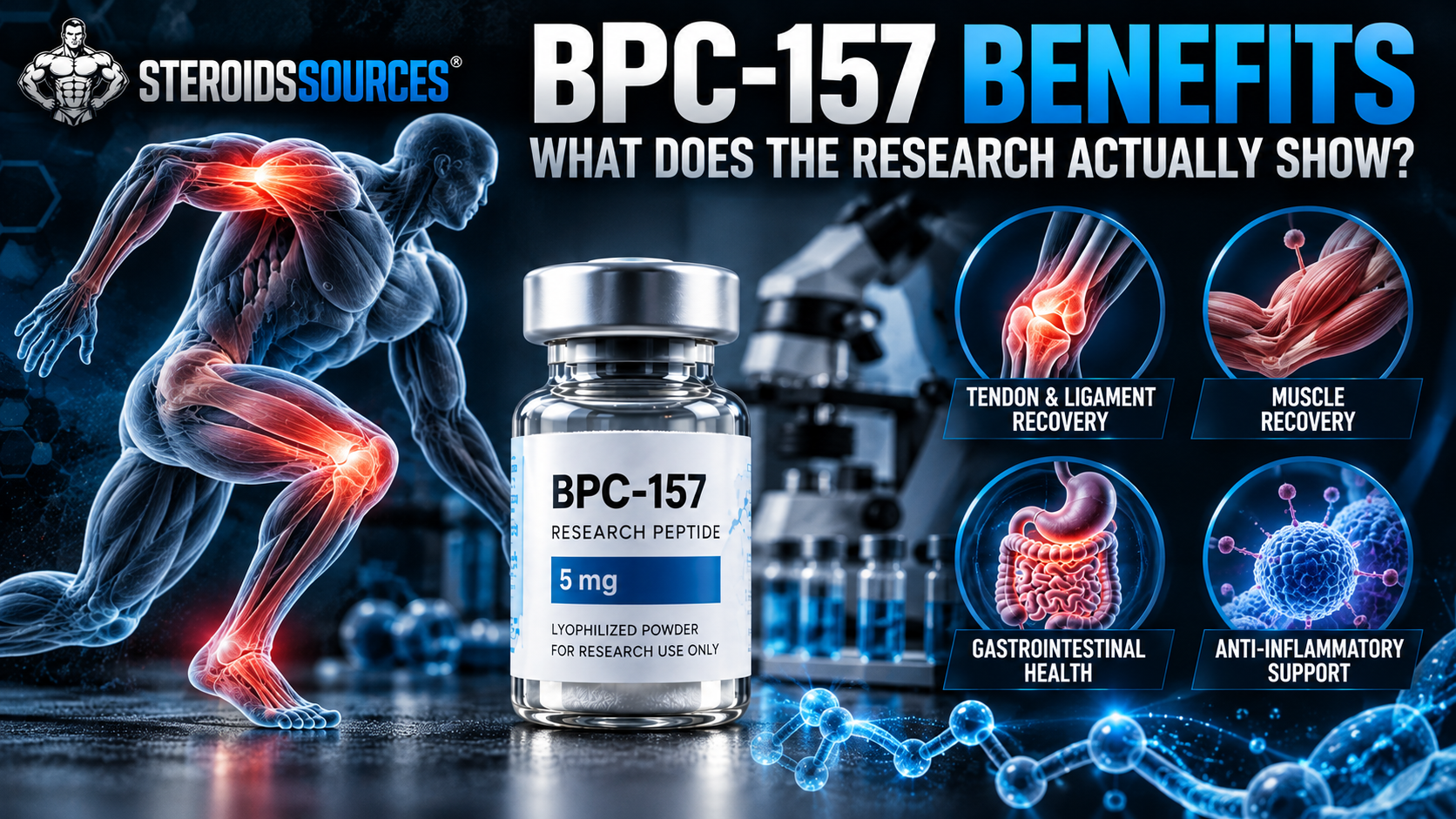
Interest in BPC-157 benefits comes largely from preclinical research and anecdotal reports. Laboratory experiments and animal studies have explored several biological effects that may be relevant to tissue injury and gastrointestinal health.
However, the strength of evidence matters. Animal research can help scientists investigate mechanisms and decide which questions deserve further study, but it cannot establish that a compound is effective in people. Human physiology, metabolism, dosing, and adverse reactions can differ substantially from findings in experimental models.
1. Tendon and Ligament Research
Tendon and ligament injuries are among the most frequently discussed applications of BPC-157. Preclinical studies have investigated whether the peptide may influence processes involved in tissue repair and the response to injury.
This research helps explain why athletes and bodybuilders have become interested in the compound. Tendon injuries can be difficult to manage, and recovery may require prolonged rehabilitation. That creates demand for treatments that might improve healing.
Nevertheless, findings from animal models do not prove that BPC-157 accelerates tendon or ligament healing in humans. There is insufficient high-quality clinical evidence to establish a reliable treatment effect, an appropriate medical protocol, or long-term safety.
Anyone dealing with a tendon or ligament injury should not substitute an experimental peptide for appropriate assessment, rehabilitation, or established medical care.
2. Muscle Recovery and Sports Performance
BPC-157 Peptide is also marketed in some fitness communities as a way to support muscle recovery. The claims often focus on reducing recovery time, helping injured tissue repair, or allowing people to return to training sooner.
These claims should be evaluated cautiously. Research involving tissue repair mechanisms does not establish that the peptide improves workout recovery, increases strength, builds muscle, or enhances athletic performance in humans.
Muscle recovery depends on many factors, including training load, nutrition, sleep, injury severity, and overall health. A product promoted as a recovery aid should not be assumed to improve these outcomes without appropriate clinical evidence.
At present, BPC-157 should not be regarded as an established sports-performance or muscle-recovery treatment.
3. Joint Health and Inflammation
Some discussions of BPC-157 focus on joint discomfort and inflammation. Preclinical research has examined biological processes associated with injury and inflammatory responses, contributing to interest in possible musculoskeletal applications.
However, inflammation is a complex biological process. It is not always harmful, and it plays a role in normal responses to injury. Altering an inflammatory pathway in an experimental model does not necessarily produce a beneficial clinical outcome.
There is not enough robust human evidence to establish BPC-157 as an effective treatment for joint pain, arthritis, or other inflammatory conditions. Claims that it reliably eliminates pain or repairs damaged joints are not supported by sufficient clinical data.
4. Gastrointestinal Health
BPC-157 has also been investigated in experimental research involving the gastrointestinal tract. This area of interest is partly responsible for claims that the peptide may support digestive health or protect gastrointestinal tissues.
Although preclinical findings may justify further investigation, they do not establish that BPC-157 treats ulcers, inflammatory bowel disease, or other digestive disorders in people.
People with persistent abdominal pain, bleeding, changes in bowel habits, or other gastrointestinal symptoms should receive appropriate medical evaluation rather than relying on claims made about an experimental peptide.
BPC-157 Research: Why the Evidence Is Still Limited
Understanding BPC-157 research requires looking beyond headlines and promotional summaries. The existence of scientific studies does not necessarily mean a compound has demonstrated clinical effectiveness.
Much of the published research on BPC-157 has involved animal models or laboratory experiments. These studies can provide information about biological activity, possible mechanisms, and questions that researchers may investigate in future clinical trials.
Several limitations remain important.
Preclinical findings are not proof of human benefit. A response observed in an animal model may not occur in humans, may be smaller than expected, or may be accompanied by adverse effects that were not apparent in the original experiment.
Clinical evidence remains limited. There is not a sufficiently strong body of high-quality human research to establish BPC-157 as a routine treatment for injury recovery, gastrointestinal disorders, or other conditions.
Safety questions remain unanswered. Limited clinical information makes it difficult to characterize adverse effects, interactions with medicines, contraindications, and risks associated with repeated or long-term exposure.
Online products may differ from research materials. Even when a published study uses a characterized compound, its findings cannot automatically be applied to a vial purchased online. Product identity, purity, formulation, concentration, and manufacturing conditions may differ.
More rigorous human research would be necessary to determine whether BPC-157 has clinically meaningful benefits and whether those benefits outweigh its potential risks.
BPC-157 Human Studies: What Do We Know?
BPC-157 Peptide human studies are a particularly important consideration because consumers often encounter confident claims about healing and recovery without seeing evidence from well-designed clinical trials.
Human studies are needed to investigate whether a treatment works in the population for which it is intended. They can also help identify adverse reactions, examine interactions, and establish whether a potential benefit is clinically meaningful rather than simply measurable in a laboratory.
For BPC-157, the available human evidence is limited compared with the claims commonly made in fitness and peptide marketing. It does not establish a validated treatment regimen or demonstrate that the peptide is safe and effective for routine use.
Important unanswered questions include:
- Does BPC-157 produce meaningful benefits for specific medical conditions in humans?
- What adverse effects can occur, and how frequently?
- Are there interactions with prescription medicines or other substances?
- What are the consequences of repeated or prolonged exposure?
- How do different formulations and routes of administration affect exposure and risk?
- Can the quality and consistency of products available outside controlled research settings be verified?
Until these questions are addressed through adequate clinical research, claims of proven human benefits should be treated cautiously. Anecdotal reports may explain why people are interested in the peptide, but they cannot establish efficacy or safety.
BPC-157 Safety: Potential Risks and Unknowns
BPC-157 safety remains a major concern because the compound has not been adequately characterized for routine human treatment. Limited information does not mean the peptide is safe; it means that important risks may not yet be understood.
Potential concerns include unknown adverse effects, interactions, inconsistent product quality, and complications associated with unverified formulations. The risks can be different depending on the product, its route of administration, the person’s health, and any other medicines or substances being used.
Product Quality and Contamination
Products sold online may not have the same manufacturing controls as approved medicines. A label or seller description alone cannot confirm the identity, concentration, purity, or sterility of the contents.
A certificate of analysis may provide useful information about a tested sample, but its value depends on the testing methods, laboratory credibility, sample traceability, and whether the results relate to the actual batch being sold.
A purity result does not automatically demonstrate sterility, absence of all contaminants, correct concentration, or suitability for human use.
Unknown Long-Term Effects
Long-term human safety data are insufficient to establish the consequences of repeated or prolonged BPC-157 exposure. This uncertainty is important for anyone considering a compound based on claims of ongoing recovery or performance benefits.
It is not scientifically appropriate to assume that a substance has no long-term risks simply because those risks have not been adequately documented.
Risks of Self-Treatment
Using an experimental compound may also delay appropriate care for an injury or underlying medical condition. Pain, swelling, digestive symptoms, and impaired movement can have different causes and may require specific diagnosis and treatment.
Anyone considering an experimental peptide should discuss the uncertainty with a qualified healthcare professional instead of relying on online protocols or vendor recommendations.
BPC 157 Side Effects: What Should You Know?
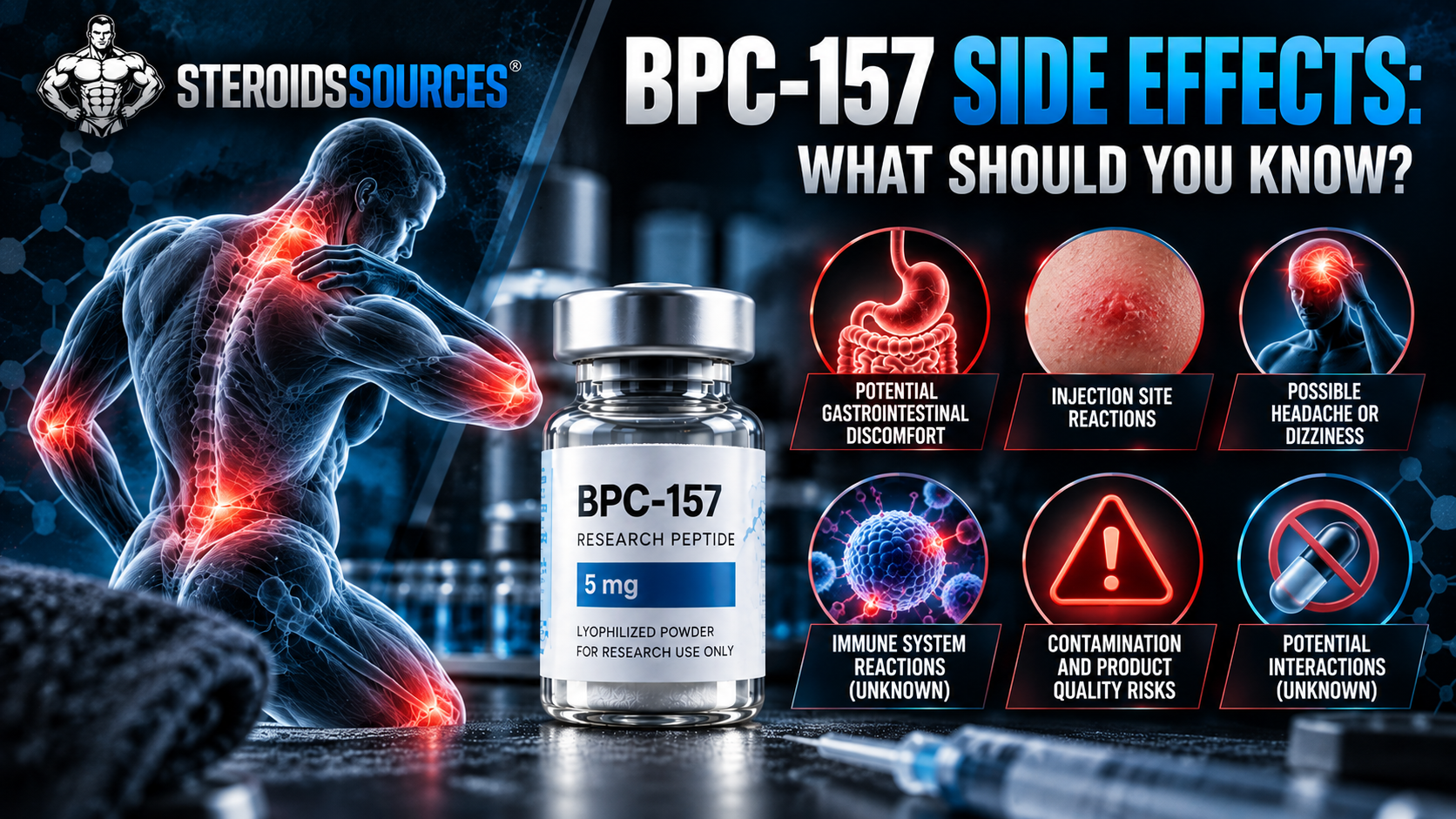
BPC-157 side effects have not been sufficiently characterized through high-quality human studies. As a result, there is no reliable basis for describing the full range of possible adverse effects, their frequency, or the circumstances in which they may occur.
This is an important difference between an experimental compound and a medicine with an established safety profile. For an approved medicine, clinical development and post-market monitoring can provide substantial information about common adverse reactions and less frequent risks. The evidence available for BPC-157 is much more limited.
Potential concerns include:
- Adverse reactions that have not been adequately identified in human studies.
- Unknown interactions with prescription medicines or other substances.
- Unpredictable effects associated with product impurities or incorrect labeling.
- Contamination risks from products that are not manufactured or handled under appropriate controls.
- Complications from using an experimental compound instead of seeking appropriate care.
These concerns should not be interpreted as a list of proven BPC-157-specific side effects. They reflect the uncertainty surrounding a compound with limited human safety data and the additional risks associated with unverified products.
Anyone experiencing unexpected symptoms after using an experimental compound should stop relying on online advice and seek appropriate medical guidance. Severe or rapidly worsening symptoms warrant urgent medical assessment.
Where to Buy BPC-157 Peptide: How to Evaluate Online Sellers
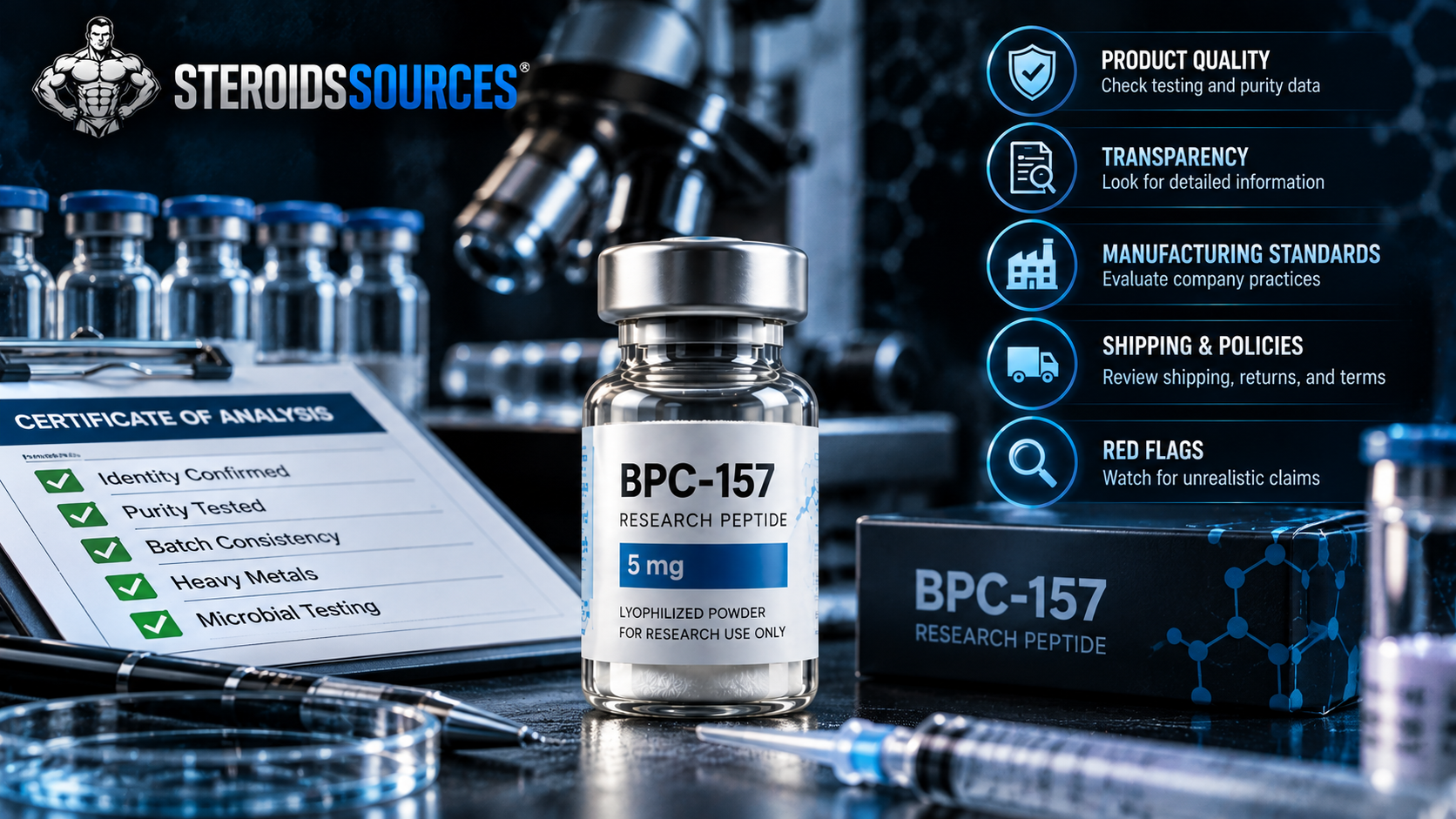
People searching for where to buy BPC-157 peptide may encounter research-chemical vendors, peptide suppliers, and websites that use medical or pharmaceutical language to promote their products.
The key issue is that availability does not establish safety, authenticity, quality, or legal authorization. A polished website, positive customer reviews, or claims of laboratory testing do not independently demonstrate that a product is suitable for human use.
If you are evaluating information from an online seller, consider the following factors.
1. Transparency About the Product
Look for clear, consistent information about what the product is claimed to contain and how the seller describes its intended use. Be cautious when listings use vague terminology, make contradictory statements, or imply that a research-use product is an approved medicine.
2. Independent Testing Claims
A seller may display a certificate of analysis or refer to third-party testing. Consider whether the document identifies the tested material, relevant batch, testing methods, and laboratory. A document that cannot be connected to the product being sold offers limited reassurance.
Even credible analytical testing has limits. Testing for identity or purity alone does not establish clinical effectiveness, human safety, or suitability for injection.
3. Manufacturing and Quality Information
Manufacturing transparency can help readers understand what is known and what remains uncertain about a product. However, claims about good manufacturing practices or laboratory standards should be supported by verifiable documentation rather than marketing language alone.
4. Medical and Regulatory Claims
Be skeptical of sellers promising guaranteed healing, rapid injury recovery, no side effects, or benefits equivalent to an approved treatment. Such statements go beyond what limited clinical evidence can establish.
5. Legal Status and Intended Use
A website may sell a compound as a research chemical while making other claims elsewhere on the site. The intended use, marketing claims, and applicable laws all matter. Do not assume that an online listing makes a product lawful or authorized for human treatment.
There is no reliable way to establish that an unapproved peptide is safe for self-administration simply by choosing a seller with persuasive marketing or a high review score.
Is BPC-157 Legal?
The answer to “Is BPC-157 legal?” depends on the country, the product’s status, and the intended use. The rules governing research chemicals may differ from those governing approved medicines, compounded preparations, supplements, or products marketed for human treatment.
Being available online does not establish that a product has been authorized for medical use. Similarly, the words “research use only” do not automatically settle every legal question concerning a product’s sale, importation, possession, or intended use.
Anyone researching BPC-157 should distinguish between three separate questions:
- Is the compound authorized as a medicine for the intended condition?
- Is the particular product legally sold or supplied for its stated purpose?
- Do local rules restrict its possession, importation, distribution, or use?
These questions may have different answers. Regulatory status can also change, so claims made by a seller should not be treated as a definitive statement of the law.
BPC-157 should not be represented as an approved human treatment when the relevant regulatory authority has not authorized it for that purpose.
BPC-157 Compared With Approved Treatments
A useful way to evaluate BPC-157 is to compare the evidence behind its claims with the evidence required for an established medical treatment.
Approved medicines are evaluated for specific indications, including evidence of effectiveness, safety, manufacturing quality, and appropriate use. The approval of a medicine does not mean it is risk-free, but it provides a defined evidence and regulatory framework.
BPC-157 does not have an equivalent established evidence base for routine human treatment. Its proposed applications remain investigational, and the available evidence is not sufficient to treat it as interchangeable with approved medicines or established injury-management approaches.
For sports injuries, appropriate care may involve diagnosis, rehabilitation, load management, physical therapy, or other interventions selected for the specific injury. For gastrointestinal symptoms, evaluation depends on the suspected cause and may require established diagnostic procedures or treatments.
The appropriate approach is to address the actual condition rather than assume an experimental peptide is a universal solution.
Frequently Asked Questions About BPC-157
Where to buy BPC-157 peptide?
BPC-157 is marketed online by vendors that describe it as a research peptide. However, availability does not demonstrate regulatory approval, product authenticity, clinical effectiveness, or safety for human use. Research-use products should not be assumed suitable for self-administration.
What are the main BPC-157 Peptide benefits?
Potential benefits discussed online include tendon and ligament recovery, muscle repair, joint health, and gastrointestinal support. These claims are largely based on preclinical research and marketing. High-quality human evidence is insufficient to establish BPC-157 Peptide as an effective treatment for these purposes.
Is BPC-157 Peptide?
Its safety for routine human use has not been adequately established. Important uncertainties include possible adverse effects, long-term risks, interactions, and the quality of products sold online.
What are the known BPC-157 Peptide side effects?
The full side-effect profile is not well characterized because robust human safety data are limited. It would be inaccurate to claim that BPC-157 has no side effects. Product contamination and incorrect labeling may introduce additional risks.
Does BPC-157 Peptide work in humans?
There is not enough high-quality clinical evidence to establish that BPC-157 reliably improves injury recovery, muscle recovery, digestive health, or other proposed applications in humans. More rigorous clinical research is needed.
Is BPC-157 FDA-approved?
BPC-157 Peptide is not an FDA-approved medicine for routine human treatment. It should not be presented as an FDA-approved therapy for injury recovery or other medical conditions.
Is BPC-157 legal to buy?
Its legal status depends on the jurisdiction, product, and intended use. Online availability is not proof that the compound is authorized for human treatment or that every sale or use is lawful.
Can BPC-157 be used for tendon injuries?
Preclinical research has investigated processes related to tendon repair, but the evidence does not establish BPC-157 as a proven treatment for tendon injuries in humans. Proper diagnosis and evidence-based injury management remain important.
Is research-grade BPC-157 suitable for injection?
A research-use label does not establish that a product is sterile, correctly formulated, or suitable for injection. Purity claims alone are not sufficient to establish those properties or demonstrate human safety.
Final Verdict: Is BPC 157 Worth Considering?
BPC-157 Peptide has attracted significant interest because preclinical research has explored biological processes relevant to tissue repair, inflammation, and gastrointestinal function. Those findings explain why researchers continue to investigate the compound, but they do not establish that it is an effective or safe treatment for people.
For readers researching where to buy BPC – 157 peptide, the most important distinction is between a product being available and a treatment having demonstrated clinical value. Online listings, laboratory claims, testimonials, and confident marketing language cannot replace adequate human evidence or appropriate regulatory authorization.
The current limitations are substantial: human effectiveness remains unproven for routine treatment, the full safety profile is uncertain, and product quality may vary between suppliers. Claims of guaranteed healing, rapid recovery, or zero side effects should therefore be treated with skepticism.
Until stronger clinical evidence and appropriate authorization are available, BPC-157 is best understood as an experimental peptide rather than an established therapy. Anyone dealing with an injury or health condition should prioritize qualified medical advice and evidence-based care over unverified online claims.