


testosterone blood work


Testosterone Blood Work: 7 Critical Things to Know
Testosterone blood work is one of the most important tools for evaluating testosterone levels, investigating possible hormone imbalances, and monitoring testosterone replacement therapy (TRT). Whether you are experiencing symptoms of low testosterone, investigating unusually high levels, or already receiving hormone treatment, understanding your blood test results can help you make more informed decisions about your health.
Testosterone plays an important role in sexual function, muscle maintenance, bone health, red blood cell production, and several metabolic processes. However, testosterone levels vary with age, time of day, sleep, illness, medications, and individual physiology. A single laboratory result does not always tell the whole story.
In this guide, we explain what testosterone blood work is called, which tests are commonly ordered, whether fasting is necessary, how to interpret testosterone blood work results, what testing costs may involve, and why regular monitoring matters during TRT.
1. What Is Testosterone Blood Work?
Testosterone blood work refers to laboratory testing that measures testosterone in a blood sample. Healthcare professionals use these tests to investigate symptoms that may be associated with abnormal hormone levels, evaluate certain endocrine conditions, and monitor people receiving testosterone treatment.
Testing can be relevant for men and women, although the reasons for testing, expected hormone ranges, and clinical interpretation differ.
In men, testing may be considered when symptoms include:
- Reduced sexual desire or libido.
- Erectile dysfunction.
- Unexplained loss of muscle mass or strength.
- Reduced body hair or other changes in sexual characteristics.
- Infertility or changes in reproductive function.
- Low bone density.
- Persistent symptoms that suggest a possible hormonal disorder.
These symptoms are not specific to low testosterone. Sleep disorders, depression, thyroid conditions, medication effects, nutritional problems, and other medical issues can cause similar complaints.
In women, testosterone blood work may be used when investigating certain symptoms or conditions involving androgen excess, such as unwanted facial or body hair, persistent acne, or irregular menstrual cycles. Results must be interpreted using appropriate female reference ranges and the broader clinical picture.
Testosterone testing may also be part of routine monitoring for someone prescribed testosterone replacement therapy. In that situation, clinicians may assess whether treatment is producing an appropriate response and whether adverse effects are developing.
The key point: Testosterone blood work is a diagnostic and monitoring tool, not a standalone measure of health, masculinity, athletic potential, or physical performance.
2. What Is Testosterone Blood Work Called?
If you are looking at a laboratory order or trying to understand a medical report, you may wonder what testosterone bloodwork is called.
The exact name depends on the test ordered.
Total testosterone
A total testosterone test measures the amount of testosterone circulating in the blood, including testosterone bound to proteins and the smaller amount that is unbound.
This is commonly the initial test used when evaluating possible testosterone deficiency in adult men.
On a laboratory report, it may appear as:
- Total Testosterone
- Testosterone, Total
- Total Testosterone, Serum
- Total Testosterone, Plasma
The exact wording varies between laboratories.
Free testosterone
Free testosterone refers to the portion of testosterone that is not bound to proteins in the bloodstream.
Because free testosterone is unbound, it is often discussed as the fraction available to enter tissues. However, its interpretation depends on the measurement method and the clinical situation.
A free testosterone bloodwork test may be considered when total testosterone results do not clearly match a person’s symptoms or when sex hormone-binding globulin (SHBG) may be affecting the interpretation.
Bioavailable testosterone
Bioavailable testosterone generally refers to free testosterone plus testosterone loosely bound to albumin.
It is not measured or reported by every laboratory, and it is not necessary for every evaluation.
SHBG
Sex hormone-binding globulin is a protein that binds testosterone and other sex hormones.
SHBG testing can help clinicians understand why two people with similar total testosterone levels may have different free testosterone estimates.
SHBG may be affected by factors such as age, thyroid status, liver conditions, body composition, and certain medications.
Other blood tests that may be ordered
Depending on the reason for testing, clinicians may also request:
- Luteinizing hormone (LH).
- Follicle-stimulating hormone (FSH).
- Prolactin.
- Estradiol.
- Thyroid tests.
- Complete blood count (CBC).
- Metabolic testing.
- Other tests relevant to fertility or the suspected underlying condition.
These additional tests do not all measure testosterone directly. Instead, they may help identify the cause of an abnormal result or assess treatment safety.
3. Testosterone Blood Work Abbreviation: What Do the Results Mean?
Laboratory reports often use abbreviations. Understanding the most common ones makes it easier to identify which measurements appear on your report.
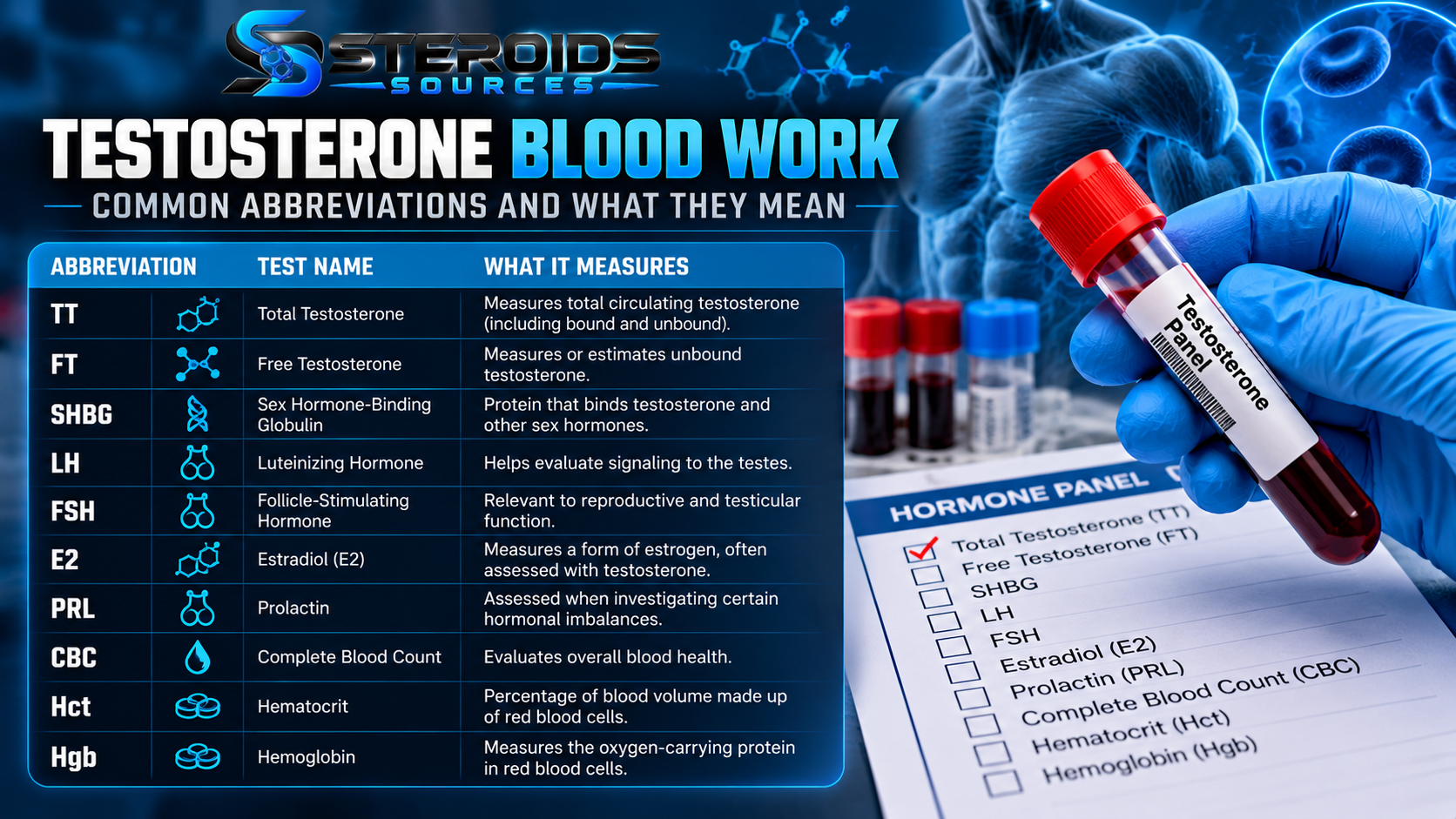
If you are wondering about the testosterone blood work name, abbreviation, or code, remember that laboratory terminology is not completely standardized. The name, units, and reporting format can differ between providers.
What is the testosterone blood work code?
There is no single universal code for every testosterone test. Laboratories may use their own internal test identifiers, while healthcare systems and insurers may use procedure or billing codes.
The correct code depends on the specific test, the laboratory, the healthcare system, and the purpose of the order. If you need a testosterone blood work code for insurance, reimbursement, or an appointment, confirm it directly with the ordering clinician or laboratory rather than assuming every provider uses the same identifier.
4. Do You Need to Fast for Testosterone Blood Work?
One of the most common questions is: do you need to fast for testosterone bloodwork?
The answer depends on the test and the instructions from your healthcare professional.
Some testosterone testing can be performed without fasting. However, fasting may be requested when a clinician wants to standardize the test conditions or when other tests are being collected at the same time.
For example, a laboratory appointment may include glucose or lipid testing, which can have different preparation requirements.
If you have been told to fast, follow the laboratory’s specific instructions. Do not assume that every testosterone test requires the same preparation.
Why does timing matter?
Testosterone levels in adult men typically fluctuate during the day, with levels often higher in the morning. This daily pattern can be particularly relevant when evaluating possible testosterone deficiency.
For this reason, guidelines commonly recommend measuring testosterone in the morning when assessing men for suspected hypogonadism. Depending on the clinical situation, repeat morning testing may be needed to confirm an initially low result.
Sleep, acute illness, calorie restriction, strenuous exercise, and certain medications may also influence hormone measurements.
How to prepare for testosterone blood work
Before your appointment:
- Confirm the appointment time. Ask whether the test should be performed in the morning.
- Check fasting instructions. Do not fast unless instructed or required for the other tests being performed.
- Tell the clinician about medications. Some medications and hormone treatments can affect test results.
- Discuss supplements. Report the supplements you use, including products marketed for testosterone support.
- Avoid changing treatment on your own. Do not stop prescribed medications or alter testosterone dosing solely to influence a blood test.
- Follow any repeat-testing instructions. If the first result is unexpectedly low or inconsistent with your symptoms, your clinician may recommend another sample.
If you are already receiving TRT, the timing of the blood draw relative to your prescribed medication can be particularly important. The appropriate timing depends on the formulation and the monitoring plan.
5. How to Understand Testosterone Blood Work Results
Testosterone blood work results are interpreted using the laboratory’s reference interval, the test method, the patient’s age and sex, symptoms, medical history, and other relevant findings.
There is no single result that automatically establishes every person’s diagnosis.
What is a normal testosterone level?
Reference ranges differ among laboratories and testing methods. They may also vary depending on age, sex, and the population used to establish the range.
For adult men, total testosterone is commonly reported in nanograms per deciliter (ng/dL) or nanomoles per liter (nmol/L).
For women, testosterone concentrations are typically much lower, so the laboratory’s units and appropriate reference range are especially important.
Always compare your result with the reference interval printed on your own report.
What does low testosterone bloodwork mean?
Low testosterone bloodwork may indicate testosterone deficiency, but one low result is not always enough to confirm the condition.
In men, a diagnosis of hypogonadism generally requires compatible symptoms or signs together with consistently low testosterone concentrations. Repeat morning measurements are often used to confirm the finding.
A clinician may also order LH, FSH, prolactin, or other tests to investigate possible causes.
Potential contributors to low testosterone include certain testicular or pituitary conditions, some medications, significant illness, and other health factors. Obesity and sleep disorders can also be relevant in some cases.
The appropriate response depends on the underlying cause, not just the number on the report.
What does high testosterone bloodwork mean?
High testosterone bloodwork can have several explanations.
Possible causes include prescribed testosterone, anabolic-androgenic steroid use, certain medical conditions, or differences in testing and measurement.
In women, elevated testosterone may warrant assessment for conditions associated with increased androgen production. The appropriate evaluation depends on symptoms, the degree of elevation, and other findings.
If you are using testosterone or another hormone product, tell your clinician. This information helps them interpret the result accurately and identify potential health risks.
Total testosterone versus free testosterone
Total testosterone and free testosterone provide different information.
A person’s total testosterone may fall within a laboratory’s reference range while free testosterone is lower or higher than expected because SHBG levels differ.
In selected cases, clinicians may use SHBG and albumin measurements to calculate free testosterone or use an appropriate laboratory method.
Free testosterone results are method-dependent, so it is important to know how the test was performed before comparing values from different laboratories.
Why one result may not tell the whole story
Testosterone levels can change between measurements. An unexpectedly low result may be related to temporary illness, poor sleep, timing, medication effects, or other factors.
That is why healthcare professionals consider the entire clinical picture rather than relying on a single laboratory number.
If your result is abnormal, discuss what it means in your particular situation before making decisions about treatment.
6. Testosterone Blood Work for Women

Testosterone is also an important hormone in women, although it is normally present at lower concentrations than in men.
Testosterone blood work for women may be ordered to investigate symptoms such as excess facial or body hair, acne, irregular menstrual cycles, or other signs that suggest increased androgen activity.
One possible cause is polycystic ovary syndrome (PCOS), although testosterone testing alone cannot establish that diagnosis.
Other causes of androgen excess may need to be considered, particularly when symptoms develop rapidly or hormone concentrations are markedly elevated.
Which testosterone tests may be used?
Depending on the clinical question, testing may include total testosterone, SHBG, and an assessment of free testosterone.
Accurate measurement can be challenging at the relatively low concentrations typically found in women. The laboratory method matters, and clinicians may prefer more accurate methods when available.
Can women have low testosterone?
Women also produce testosterone, and concentrations change with age and reproductive status. However, there is no single blood test that reliably explains every symptom sometimes attributed to low testosterone.
Fatigue, reduced libido, mood changes, and reduced energy can have many causes. A clinician should evaluate symptoms in context rather than assuming that a low-normal result requires hormone treatment.
Women should not interpret testosterone reference ranges intended for adult men as their own targets.
7. Testosterone Blood Work Cost and Where to Get Tested
The cost of testosterone blood work depends on the country, laboratory, type of test, healthcare system, insurance coverage, and whether a clinician’s consultation is included.
A basic total testosterone test will generally involve a different cost from a larger hormone panel that includes free testosterone, SHBG, LH, FSH, or other measurements.
How much does blood work for testosterone cost?
There is no single price that applies to every patient or location.
When comparing prices, check whether the quoted amount includes:
- The laboratory test itself.
- A clinician’s consultation or laboratory order, if required.
- Sample collection fees.
- Additional hormone tests.
- Result interpretation or follow-up.
- Insurance deductibles, copayments, or other charges.
A low advertised price may cover only one measurement, while a more comprehensive panel may include tests that are not necessary for every person.
Ask the provider what is included before paying.
Where to get testosterone blood work
Depending on your location and healthcare system, testing may be available through:
- A primary care clinic.
- An endocrinologist or another relevant specialist.
- A hospital laboratory.
- A licensed diagnostic laboratory.
- An authorized testing service that works with qualified healthcare professionals.
If you search for testosterone blood work near me, check that the provider uses an appropriate laboratory and clearly explains how results are delivered and interpreted.
Direct-to-consumer testing may be available in some regions, but availability and rules differ. Testing without a consultation does not necessarily provide an explanation of abnormal findings or identify the cause of symptoms.
How long does testosterone bloodwork take?
Blood collection itself usually takes only a few minutes. The time required to receive results depends on the laboratory, the specific test, whether additional testing is required, and local processing arrangements.
Some results may be available relatively quickly, while specialized testing can take longer.
Ask the laboratory for its expected turnaround time. If your clinician ordered multiple tests, the results may not all become available at the same time.
8. Testosterone Monitoring Blood Work During TRT

Testosterone monitoring blood work is important for people receiving prescribed testosterone replacement therapy.
TRT can be an appropriate treatment for certain patients with confirmed testosterone deficiency, but it requires individualized medical assessment and follow-up.
Monitoring helps clinicians evaluate whether treatment is achieving its intended purpose and whether adverse effects or other health concerns are emerging.
What blood tests may be used during TRT?
Depending on the patient, formulation, and treatment plan, monitoring may include:
Testosterone levels: Used to assess the response to treatment. The timing of testing should be appropriate for the prescribed formulation.
Complete blood count and hematocrit: Testosterone can increase red blood cell production. Monitoring helps identify an excessive rise in hematocrit that may require medical attention.
Prostate-related assessment: For appropriate patients, prostate health and the potential role of prostate-specific antigen (PSA) testing may be discussed based on age, risk factors, symptoms, and current clinical guidance.
Other tests when indicated: Depending on symptoms and medical history, clinicians may assess blood pressure, metabolic health, lipids, liver-related markers, or other parameters.
Not every patient needs every test at every appointment. Monitoring should be based on the person’s clinical circumstances and current medical recommendations.
Why is hematocrit important?
Hematocrit measures the proportion of blood volume occupied by red blood cells. Testosterone treatment can raise hematocrit in some patients.
A substantial increase may require a clinician to reassess the treatment, investigate contributing factors, or consider changes to the management plan.
Do not attempt to manage an abnormal hematocrit independently. The appropriate response depends on the degree of elevation and the patient’s overall health.
How often should TRT blood work be performed?
The schedule depends on the treatment, the patient’s response, the formulation used, and any relevant health risks.
Clinicians commonly arrange baseline testing before treatment and follow-up testing after treatment begins or changes. Once treatment is stable, monitoring continues at intervals appropriate to the patient.
There is no single schedule that is correct for everyone.
If you are receiving TRT, ask your prescriber which tests you need, when the blood sample should be collected relative to your medication, and which results require follow-up.
9. Can You Take Testosterone Without Blood Work?
The question of testosterone without blood work often comes up in bodybuilding communities and online discussions about TRT.
The safer medical approach is to establish whether treatment is appropriate before starting testosterone.
In men being evaluated for suspected hypogonadism, symptoms alone are generally insufficient for diagnosis. Clinicians use hormone measurements together with the patient’s medical history and examination.
Taking testosterone without appropriate evaluation can also make it harder to identify the original cause of symptoms and can introduce additional risks.
Why testing matters before treatment
Baseline assessment helps establish whether testosterone is consistently low and whether other conditions could explain the symptoms.
It can also identify health factors that affect treatment decisions, including fertility plans, certain blood abnormalities, and relevant prostate or cardiovascular considerations.
Testosterone treatment can suppress the body’s own hormone signaling and reduce sperm production. This is particularly important for people who want to preserve fertility.
What about testosterone without bloodwork discussed on Reddit?
Online forums can contain personal experiences about starting testosterone without laboratory testing or medical supervision. These accounts are not a substitute for clinical evidence and may omit important details about the person’s health, product quality, adverse effects, and follow-up.
Anecdotal reports cannot establish that an approach is safe for other people.
Avoid using another person’s blood results, treatment schedule, or experience as a substitute for your own medical evaluation.
Can you monitor TRT without blood work?
Blood tests are an important component of appropriate TRT monitoring. Symptom improvement alone cannot reveal every potential adverse effect, including changes in hematocrit or whether testosterone concentrations are appropriate for the treatment plan.
If cost or access is a barrier, discuss the issue with a qualified healthcare professional. They may help identify which tests are necessary and where testing is available.
10. Common Mistakes When Interpreting Testosterone Blood Work
Even when a report is easy to read, several common mistakes can lead to incorrect conclusions.
Treating the reference range as a personal target
A laboratory reference interval is not necessarily the ideal target for every individual. Results must be interpreted in context, particularly during hormone treatment.
Comparing results from different laboratories without checking units
Laboratories may use different units, methods, and reference intervals. Confirm these details before comparing reports.
Ignoring symptoms
A number alone cannot explain every symptom. Fatigue, low libido, mood changes, and reduced performance may have causes unrelated to testosterone.
Assuming more testosterone is always better
Higher testosterone concentrations do not automatically produce better health or greater athletic performance. Excessive exposure can increase risks and may require medical assessment.
Changing treatment to influence a result
Altering a prescribed dose or timing without medical guidance can make results harder to interpret and may compromise treatment safety. Follow your clinician’s testing instructions.
Skipping follow-up after an abnormal result
An abnormal result may require repeat testing, additional investigations, or a discussion of possible causes. Do not ignore a result simply because you feel well.
Frequently Asked Questions About Testosterone Blood Work
What is testosterone bloodwork called?
It is commonly called a total testosterone test or testosterone blood test. Depending on the clinical question, a clinician may also request free testosterone, SHBG, or other hormone tests.
Do you need to fast for testosterone blood work?
Not always. Follow the instructions provided by your clinician or laboratory. Fasting may be requested because of the specific testing plan or other blood tests being collected.
What is the abbreviation for testosterone on bloodwork?
Common labels include TT for total testosterone and FT for free testosterone, although terminology varies by laboratory. SHBG is another related measurement that may appear on a hormone panel.
How long does testosterone bloodwork take?
The blood draw generally takes only a few minutes. The time needed to receive results varies by laboratory and test type.
How much does testosterone blood work cost?
The price depends on your location, laboratory, test type, insurance, and whether consultation or additional tests are included. Request an itemized price from the provider.
What does low testosterone bloodwork mean?
It may indicate testosterone deficiency, but diagnosis generally requires compatible symptoms and appropriately collected, consistently low measurements. Additional testing may be needed to identify the cause.
Can women get testosterone blood work?
Yes. Clinicians may order it to investigate androgen-related symptoms or certain endocrine conditions. Results must be interpreted using appropriate reference ranges and clinical context.
Can you take testosterone without blood work?
Starting testosterone without appropriate assessment is not recommended. Blood testing helps establish whether treatment is indicated and provides a baseline for monitoring potential adverse effects.
What blood work is needed for TRT monitoring?
Depending on the individual, monitoring may include testosterone levels, a complete blood count and hematocrit, and other tests based on medical history, risk factors, and treatment guidelines.
Is free testosterone more important than total testosterone?
Neither measurement is universally more important. Total testosterone is commonly used for initial assessment, while free testosterone may help in selected situations, such as when SHBG levels affect interpretation.
Final Thoughts: Why Testosterone Blood Work Matters
Testosterone blood work can help investigate hormone-related symptoms, identify possible testosterone deficiency, and monitor prescribed testosterone replacement therapy.
Understanding the test names, abbreviations, preparation requirements, costs, and result ranges can make it easier to discuss your health with a qualified clinician.
The most important principles are straightforward: follow the laboratory’s preparation instructions, interpret results using the correct reference range, confirm suspected low testosterone when appropriate, and do not use hormone treatment without suitable medical assessment and monitoring.
Whether you are investigating low testosterone bloodwork, high testosterone bloodwork, or routine TRT monitoring, the goal is not simply to obtain a particular number. It is to understand what the result means for your health and what, if anything, should happen next.